


03 Aug Best Insurance for Towing Companies: A 2026 Guide
Best Insurance for Towing Companies: A 2026 Guide
Last Updated: July 30, 2026
Finding the best insurance for towing companies requires understanding the unique risks that come with towing and recovery operations. Towing businesses face exposure to bodily injury claims, property damage liability, and vehicle damage that standard commercial policies don’t cover adequately. This guide walks you through the essential coverage types, cost factors, and practical steps to secure the right policy for your operation.
Best Insurance for Towing Companies: Essential Coverage Overview
Towing operations sit in a high-risk category that demands specialized insurance architecture. A standard commercial auto policy won’t protect you when a client’s vehicle is damaged while on your hook, when a bystander is injured during a recovery, or when your tow truck causes property damage at a job site. The best insurance combines multiple coverage layers, each addressing a specific exposure that could otherwise bankrupt your business.
The foundation of proper towing insurance includes general liability, commercial auto coverage, on-hook protection, and garage keepers liability. For larger operations or specialized services, you may also need excess liability, workers compensation, and cargo coverage. The specific combination depends on your fleet size, the types of towing you perform, and your state’s regulatory requirements.
Most towing operators discover coverage gaps only after filing a claim. Review your current policy against the coverage types in this guide, you’ll likely find at least one significant gap.
Types of Tow Truck Insurance Coverage Explained
Each coverage type addresses a specific risk exposure, and skipping any one creates a dangerous blind spot in your protection.
General Liability & Bodily Injury Protection
General liability insurance covers bodily injury and property damage claims that arise from your business operations, but not from vehicle accidents. If a client is injured while you’re securing their vehicle, or if your equipment damages someone’s property during a tow, general liability responds.
Bodily injury coverage pays for medical expenses, lost wages, and legal costs if someone is injured due to your negligence. Policy limits typically start at $300,000 per occurrence, though many operators carry $500,000 to $1,000,000 for better protection. General liability is one of the more affordable components of a towing insurance package.
Commercial Auto & Physical Damage Coverage
Commercial auto insurance covers accidents involving your tow truck and any other vehicles in your fleet. This includes liability (if you cause an accident) and physical damage (if your vehicle is damaged).
Physical damage coverage comes in two forms: collision (covers damage from impact) and comprehensive (covers theft, weather, vandalism, and other non-collision damage). Most lenders require both if you have outstanding loans on your equipment.
For a towing operation, commercial auto insurance is non-negotiable. Your tow truck is your primary asset, and a single accident could sideline your business for weeks while repairs happen.
Many operators carry minimum liability limits ($25,000-$50,000) to save on premiums, then face catastrophic exposure if they cause a serious accident. A single injury claim can exceed $500,000. Underinsuring on liability is one of the costliest mistakes towing businesses make.
Garage Keepers Liability for Vehicle Care
Garage keepers liability protects you when a client’s vehicle is damaged while in your care, whether you’re storing it, repairing it, or transporting it. A customer’s vehicle rolls into another vehicle in your yard, causing $15,000 in damage. Without garage keepers liability, you’re liable. With it, your insurance responds.
This coverage is essential for any towing operation that stores vehicles, even temporarily.
On-Hook Towing Insurance: What You Need to Know
On-hook coverage is the most specialized form of towing insurance. This coverage protects against damage to a client’s vehicle while it’s being towed, literally while it’s on your hook.
Many operators assume their general liability or commercial auto policy covers this exposure. They don’t. On-hook coverage is a specialized endorsement that must be added explicitly to your policy. Without it, you’re personally liable for any damage to a client’s vehicle while it’s being towed.
Coverage Limits & Policy Exclusions
On-hook policies typically offer coverage limits ranging from $50,000 to $250,000 per occurrence, depending on the types of vehicles you tow. If you’re towing luxury vehicles or high-value commercial vehicles, you may need higher limits.
Most on-hook policies exclude damage caused by the client’s own negligence or improper vehicle condition. If a client’s vehicle has faulty brakes and is damaged during towing due to brake failure, the policy may not respond. Another common exclusion involves improper loading or securement. If you fail to properly strap a vehicle and it’s damaged as a result, the insurer may deny the claim. This is why proper training and documentation of your securement procedures matter for both liability protection and claims approval.
Tow Truck Insurance Requirements by State & Federal Law
Insurance requirements for towing companies vary significantly by state. Some states mandate specific minimum liability limits for commercial vehicles. Others require garage keepers liability for any business storing vehicles.
Most states require commercial vehicles over a certain weight to carry liability insurance of at least $750,000 to $1,000,000. Many towing trucks exceed these weight thresholds, making higher limits legally mandatory.
Commercial Vehicle Registration & Licensing
Your tow truck likely requires a commercial driver’s license (CDL) if it exceeds a certain gross vehicle weight rating (GVWR). The specific threshold varies by state, typically 26,001 pounds or more.
Your state’s Department of Transportation may also require operating authority or a towing license. Before securing insurance, verify your state’s specific requirements, your insurance carrier will ask about these credentials anyway.
Insurance requirements are minimums, not recommendations. Meeting the legal minimum often leaves you underinsured for real-world claims. Carriers and risk managers typically recommend coverage limits 2-3 times the legal minimum.
Understanding Tow Truck Insurance Cost Factors
Towing insurance premiums aren’t arbitrary. Carriers use specific data points to calculate your risk profile and set your rate.
Fleet Size, Experience & Loss History Impact
Larger fleets typically pay lower per-unit premiums because the insurer can spread risk across more vehicles. Your experience matters significantly, a towing operator with 15 years of clean driving and no claims history pays substantially less than someone starting their first year in business.
Your loss history is the single biggest pricing factor. If you’ve filed three claims in the past three years, expect higher premiums than someone with zero claims. The types of towing you perform also affect pricing. Long-distance highway towing is considered lower-risk than urban short-haul work. Specialized services like heavy-duty recovery or luxury vehicle transport command higher premiums.
Cost-Saving Strategies for Small Towing Operations
Small towing operations can reduce insurance costs without cutting coverage corners. Bundling multiple policies (auto, liability, workers comp) with the same carrier often qualifies you for a multi-policy discount of 10-15%.
Investing in loss control measures also reduces premiums. Installing GPS tracking on your vehicles, implementing driver safety training programs, and maintaining detailed maintenance records demonstrate to insurers that you take risk seriously. Some carriers offer premium discounts of 5-10% for documented safety programs.
Increasing your deductible is another cost lever. Moving from a $500 deductible to a $2,500 deductible can reduce your annual premium by 15-25%. This strategy works only if you have cash reserves to cover the higher deductible if a claim occurs.
Consider joining a towing association or industry group. Many associations negotiate group insurance rates for members. The American Towing Association offers resources and industry connections that many carriers respect.
Insurance for Specialized Towing Services
Not all towing is the same, and insurance requirements vary based on what you’re towing and how you’re towing it.
Heavy-Duty, Repossession & Luxury Vehicle Transport
Heavy-duty recovery, pulling large trucks, buses, or machinery, requires specialized equipment and expertise. Insurance carriers view this as higher-risk work because of the complexity and potential for significant property damage. Expect to pay 20-40% more for heavy-duty coverage than standard light-duty towing.
Repossession towing adds legal and liability complexity. Repo operators face exposure to claims of improper repossession, vehicle damage during the repo process, and confrontations with vehicle owners. Specialized repo insurance includes coverage for these exposures but costs significantly more than standard towing coverage.
Luxury vehicle transport, towing high-end cars, exotic vehicles, or collector cars, demands higher on-hook coverage limits and often requires proof of specialized training or certification. A single luxury vehicle can be worth $100,000 to $500,000 or more, making standard on-hook limits inadequate. Expect to pay 30-50% more for luxury vehicle coverage.
For any specialized towing service, work with carriers experienced in that specific niche. Misrepresenting your work to save on premiums is insurance fraud and will result in claim denial and potential criminal liability.
Claims Handling Process for Towing Operations
Understanding how to file and manage a claim increases the likelihood of approval and reduces the time to resolution.
Documentation, Timeline & What to Expect
The moment an incident occurs, document everything. Take photos of the scene, the vehicles involved, and any injuries or damage. Collect contact information from witnesses, the client, and any other parties involved. Write down what happened while it’s fresh, including times, weather conditions, and any unusual circumstances.
Report the claim to your insurance carrier within 24-48 hours. Most policies require prompt notification, and delays can result in claim denial. Your carrier will assign a claims adjuster who will investigate the claim. Cooperate fully and provide everything requested.
Most straightforward claims are resolved within 30-60 days. Complex claims involving injuries, multiple parties, or significant property damage can take 90-180 days or longer.
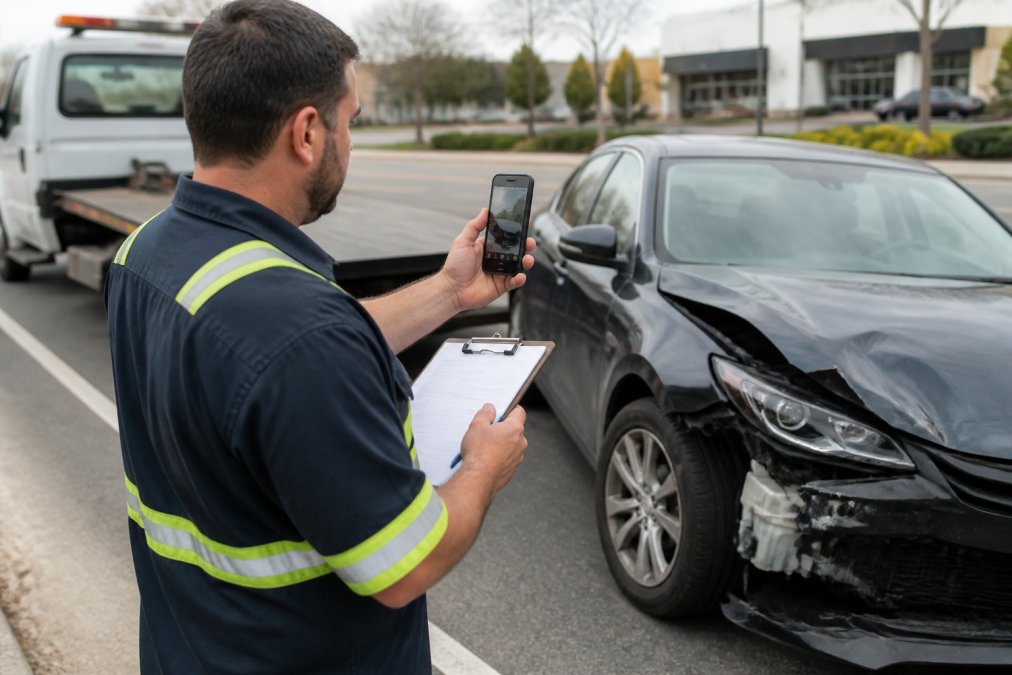
Keep detailed records of every claim you file, including the claim number, adjuster name, dates of communication, and final resolution. This history becomes valuable if you ever need to dispute a claim denial or switch carriers.
How to Choose the Best Insurance for Your Towing Business
Selecting the right insurance requires evaluating your specific risks, comparing carrier options, and ensuring your coverage aligns with your business model.
Evaluating Coverage Gaps & Getting Quotes
Start by listing every exposure your towing operation faces. If you store vehicles, you need garage keepers liability. You tow luxury vehicles; you need higher on-hook limits. If you operate in multiple states, you need coverage that extends across state lines.
Once you’ve identified your exposures, review your current policy against this list. Many operators discover they’re missing critical coverage or carrying inadequate limits.
When getting quotes, provide carriers with detailed information about your operation: number of vehicles, types of towing you perform, annual mileage, employee count, loss history, and any specialized services.
Compare quotes side-by-side using a simple table:
| Coverage Type | Carrier A | Carrier B | Carrier C |
|---|---|---|---|
| General Liability | $500K/$1M | $500K/$1M | $300K/$1M |
| Commercial Auto | $100K/$300K | $100K/$300K | $50K/$100K |
| On-Hook | $100K | $150K | $100K |
| Garage Keepers | Included | $50K | Included |
| Annual Premium | $3,200 | $3,500 | $2,800 |
Don’t automatically choose the cheapest option. A lower premium often means lower coverage limits or higher deductibles. The best insurance balances cost with adequate protection.
Ask each carrier about discounts you may qualify for: bundling discounts, safety program discounts, claims-free discounts, or association membership discounts. These can reduce your annual premium by 15-25% without cutting coverage.
Colstan & Associates helps towing operators evaluate their specific risks and connect them with carriers experienced in towing insurance. Our team understands the unique exposures towing businesses face and can identify coverage gaps you might miss on your own. We manage the quote process, compare options, and handle renewals so you can focus on running your business.
Choosing the right insurance protects your towing business from catastrophic financial loss. A single serious claim, a client’s vehicle damaged while on your hook, a bystander injured at your facility, or a major accident involving your tow truck, can exceed $500,000 in liability. Without proper coverage, that loss comes directly out of your pocket. Colstan & Associates specializes in commercial insurance for towing and recovery operations. Get a personalized quote from Colstan & Associates today and ensure your business is properly protected.
Frequently Asked Questions
What types of insurance do towing companies need?
Towing companies typically need commercial auto insurance, general liability coverage, on-hook coverage (for vehicles being towed), garage keepers liability (for customer vehicles in your care), and workers compensation. Many operators also carry excess liability and umbrella policies for additional protection. Your specific needs depend on your fleet size, services offered, and state regulations. Consult with an agent experienced in towing operations to identify coverage gaps.
What is on-hook towing insurance and why is it important?
On-hook coverage protects vehicles while they’re being transported on your tow truck. It covers damage to the towed vehicle from accidents, theft, or weather during transit. This is critical because standard commercial auto insurance typically excludes liability for the cargo you’re hauling. Without on-hook coverage, you’re personally liable for damage to customer vehicles, which can result in significant financial losses and legal disputes.
How much does tow truck insurance cost?
Tow truck insurance costs vary based on fleet size, vehicle types, experience, claims history, coverage limits, and location. A single power unit might cost differently than a 10-truck fleet. Factors like whether you handle repossession or heavy-duty towing also affect premiums. Rather than guessing, get personalized quotes from brokers who understand towing operations, they can identify discounts and ensure you’re not overpaying for unnecessary coverage.
What are the main federal and state requirements for towing companies?
Federal requirements include proper commercial vehicle registration, DOT compliance for certain vehicle weights, and workers compensation insurance in most states. State requirements vary significantly, some require specific insurance minimums, commercial licenses, or safety certifications. The Federal Motor Carrier Safety Administration (FMCSA) sets standards for commercial trucking operations. Contact your state’s Department of Motor Vehicles and a licensed insurance agent to confirm exact requirements for your location and service type.
What factors most affect tow truck insurance premiums?
Key premium drivers include your fleet size (more vehicles = higher cost), driver experience and safety records, claims history, types of towing services (specialty services cost more), coverage limits chosen, deductibles, and geographic location. Newer operators typically pay more than experienced ones. Implementing telematics and loss control programs can reduce premiums. Working with an MGA or broker who specializes in towing can help identify which factors most impact your rates and where you can save.