


16 Sep Classic Car Insurance Value Assessment: A How-To Guide
Table of Contents
- Understanding Classic Car Insurance Value Assessment
- Agreed Value vs. Stated Value: Which Valuation Method Works for You
- Classic Car Appraisal Requirements and When You Need One
- Documenting Your Vehicle’s Condition: The Essential Steps
- How to Insure a Classic Car Collection Effectively
- Using Online Valuation Tools and Market Data
- Handling Post-Claim Valuation Disputes
- Conclusion
Last Updated: August 24, 2026
Understanding Classic Car Insurance Value Assessment
Valuing a classic car for insurance purposes isn’t straightforward. Unlike standard vehicles that depreciate predictably, collector cars appreciate, stabilize, or fluctuate based on rarity, condition, restoration quality, and market demand. Getting the valuation right matters enormously, too low and you’re underinsured; too high and you’re overpaying premiums for coverage you don’t need.
The challenge is that traditional appraisal methods designed for everyday cars fall apart when applied to vehicles worth tens of thousands or more. A 1963 Corvette Stingray isn’t just transportation, it’s an asset that requires specialized assessment. At Colstan & Associates, we work with classic car owners to navigate this complexity, ensuring they understand the different valuation approaches and choose the method that protects their investment.
Classic car insurance value assessment determines how much your vehicle is actually worth and what coverage amount makes sense. This process involves understanding the difference between agreed value, stated value, and actual cash value, three approaches that can produce dramatically different outcomes when you file a claim.
Agreed Value vs. Stated Value: Which Valuation Method Works for You
Agreed value means you and your insurance company settle on a specific dollar amount before a loss occurs. If your car is damaged or totaled, the insurer pays that agreed amount, regardless of what the car might be worth at the time of the claim. This eliminates the post-loss appraisal dispute entirely.
Stated value is different. You declare what you believe the car is worth, but if a claim happens, the insurer may still conduct an appraisal to verify that amount. If the actual value comes in lower, you’re paid the lower figure. Stated value offers less certainty than agreed value but typically costs less in premiums.
The practical difference: agreed value protects you from valuation arguments after a loss. Stated value is cheaper but leaves room for disagreement. For vehicles worth more than $25,000, most collectors prefer agreed value because the peace of mind outweighs the slightly higher premium cost (aaa.com).
How Actual Cash Value Differs
Actual cash value (ACV) is what your car would sell for on the open market right now, minus depreciation. This is the standard method for regular auto insurance, and it’s the worst choice for classic cars.
Why? Because ACV relies on comparable sales data, and classic cars rarely have true comparables. A 1972 Chevrolet Chevelle SS in mint condition isn’t comparable to a 1972 Chevelle in fair condition, they might be worth $40,000 and $15,000 respectively. The market is too thin and too specialized for ACV to work fairly.
ACV also doesn’t account for the specific restoration work you’ve invested in. If you spent $30,000 restoring a vehicle to show-quality condition, ACV might still value it at $35,000 because that’s what "similar" cars sold for, ignoring your superior restoration quality. This is why serious collectors avoid ACV policies entirely.
| Valuation Method | How It Works | Best For | Key Advantage | Key Risk |
|---|---|---|---|---|
| Agreed Value | You and insurer agree on value upfront | Valuable collector cars | No post-loss disputes | Slightly higher premiums |
| Stated Value | You declare value; verified at claim time | Mid-range collector cars | Lower premiums | Insurer can adjust at claim |
| Actual Cash Value | Market value minus depreciation | Regular vehicles only | Lowest premiums | Severely undervalues classics |
Classic Car Appraisal Requirements and When You Need One
Most insurance companies require an independent appraisal before issuing an agreed value policy on a vehicle worth more than $10,000 (naic.org). This protects both you and the insurer, you get an objective assessment, and the insurer avoids insuring a car for more than it’s actually worth.
The appraiser will examine the vehicle’s condition, originality, restoration quality, mechanical soundness, and provenance. They’ll produce a detailed written report documenting everything, including photographs. This report becomes the basis for your agreed value amount.
When do you actually need a professional appraisal? If your car is worth less than $5,000, a detailed photograph inventory and maintenance records might suffice. Between $5,000 and $10,000, many insurers accept a detailed owner statement plus documentation. Above $10,000, professional appraisal is standard. For vehicles worth $50,000 or more, multiple appraisals from different specialists are common.
The appraisal process typically takes 2-4 weeks. The appraiser needs time to inspect the vehicle thoroughly, research comparable sales, and compile their findings. Rushing this process produces a weaker report that might be challenged later.
DIY vs. Professional Appraisal: What’s the ROI?
A professional appraisal can be a worthwhile investment depending on the vehicle’s complexity and value. For a high-value car, that’s a small price for certainty. For a lower-value car, it’s a harder calculation.
The DIY approach means you document the car yourself: photographs from multiple angles, detailed condition notes, maintenance and repair records, receipts for any recent restoration work. You compile this into a written statement describing the vehicle’s condition, originality, and market position. Some insurers will accept this for vehicles under a certain value threshold.
The risk with DIY documentation is that it’s not independent. If a claim occurs and the insurer suspects you’ve overstated the value, they may challenge your documentation. A professional appraiser’s report carries weight because they have no financial interest in the outcome, they’re paid the same fee regardless of what value they assign.
For most collectors, the math favors professional appraisal on vehicles worth more than a certain amount. The cost is small relative to the asset value, and the certainty eliminates future disputes. For vehicles under a specific value, detailed DIY documentation often suffices, especially if you’re using stated value rather than agreed value.
Documenting Your Vehicle’s Condition: The Essential Steps
Documentation is your evidence. When you file a claim or renew your policy, what you’ve recorded becomes the record of what the vehicle was worth and what condition it was in.
Start with photographs. Take images from multiple angles in natural daylight, front, rear, both sides, interior, engine bay, undercarriage if possible. Photograph any unique features, custom work, or exceptional condition details. Close-ups of the dashboard, steering wheel, seats, and trim show condition clearly. If the car has a show-quality paint job or restoration, photograph that specifically. Aim for at least 30-50 high-quality images.
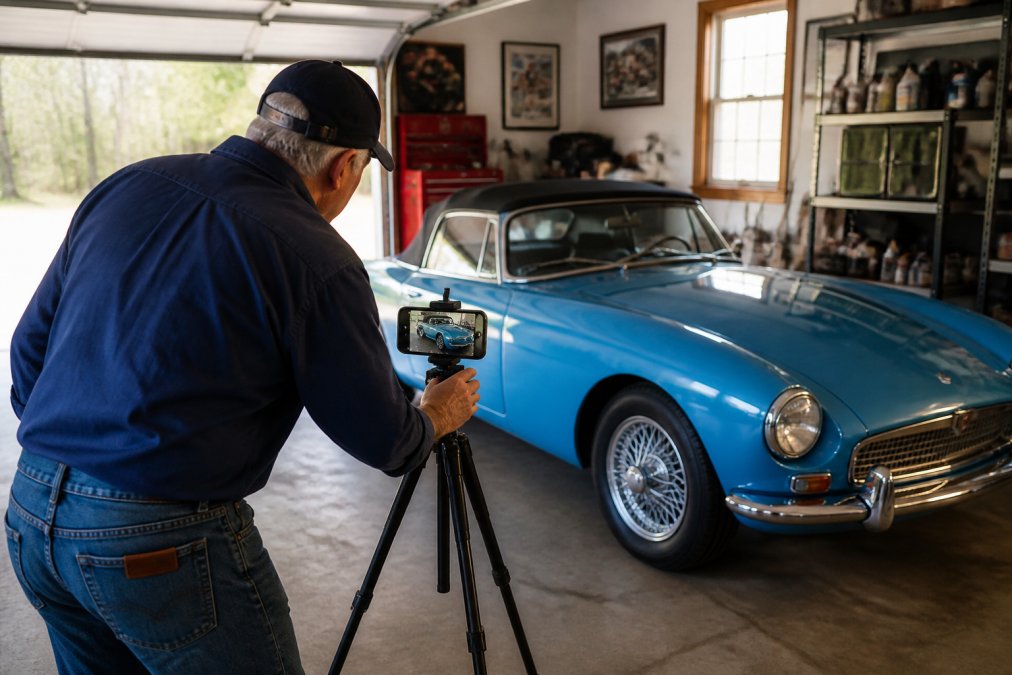
Next, document maintenance and repair history. Collect all receipts for work done in the past 5-10 years. If you’ve restored the car, gather receipts for parts, labor, and materials. Note the current mileage and any known mechanical issues. Create a written summary of the car’s history: when you acquired it, what condition it was in then, what work you’ve completed, and what remains.
Record the vehicle’s specifications: exact year, make, model, engine size, transmission type, original color, current color, body style, and any special features. Note whether it’s numbers-matching (original engine and transmission) or a restomod (modern components in a classic body). Note any rare or desirable features, a 1969 Chevrolet Chevelle SS 396 with the original L78 engine is worth significantly more than the same body with a 350.
Store this documentation digitally and physically. Use cloud storage so it’s retrievable even if your home is damaged. Keep printed copies in a safe deposit box. The goal is to have irrefutable evidence of what the car was, what condition it was in, and what work has been done.
How to Insure a Classic Car Collection Effectively
If you own multiple classic cars, each vehicle needs its own valuation and coverage assessment. Many collectors make the mistake of lumping all vehicles under one policy or one agreed value amount. This creates problems: if you have a $300,000 collection but one policy with a $300,000 limit, a total loss on your most valuable car leaves the others uninsured.
The right approach is individual agreed value policies for each car, or a scheduled personal property rider that lists each vehicle separately with its own value and coverage limit. This ensures each car is properly insured regardless of what happens to the others.
Consider storage and usage. A car garaged year-long and driven only to shows is a different risk profile than one driven regularly. Some insurers offer lower premiums for limited-use vehicles. Be honest about annual mileage, if you claim 500 miles per year but actually drive 5,000, you’re misrepresenting the risk.
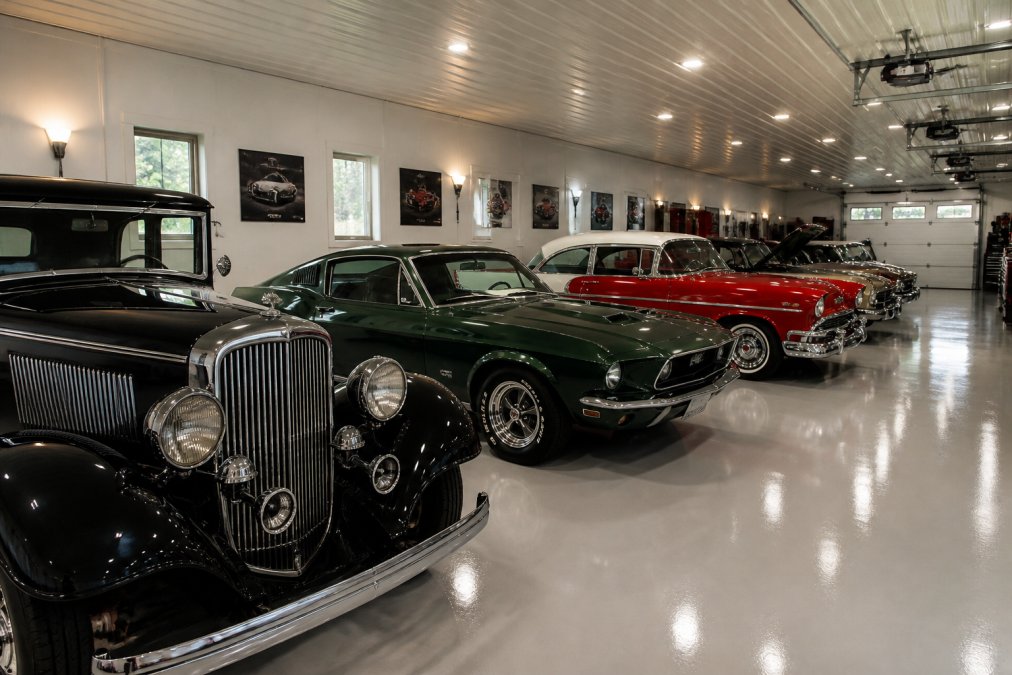
For a collection, work with an agent who understands classic cars specifically. Generic insurance agents often don’t know the nuances, they’ll quote you based on market value rather than collector value, or they’ll assume all classics are the same risk. Colstan & Associates has experience insuring collector car portfolios and understands how to structure coverage so each vehicle gets the protection it deserves.
Restomod vs. Numbers-Matching: Impact on Value
A numbers-matching vehicle has its original engine, transmission, and other key components. A 1970 Dodge Challenger with the original 440 Magnum engine and 727 transmission is worth significantly more than an identical car with a 350 Chevy engine swap (hagerty.com). Originality matters enormously in the collector market.
A restomod (restoration + modern) combines a classic body with modern mechanical components. A 1963 Corvette Stingray with a modern LS engine, independent rear suspension, and modern brakes is more fun to drive and more reliable than original, but it’s worth less to purists. Restomod values depend heavily on execution quality and the specific modifications chosen.
Insurance companies treat these differently. A numbers-matching car with original components might qualify for agreed value based on documented originality. A restomod might be harder to value because there’s less market data for custom builds. If you own a restomod, be prepared to provide detailed documentation of the work done, the components used, and comparable sales of similar vehicles.
The practical implication: when getting your car appraised, make sure the appraiser understands whether you’re pursuing originality or modification value. A numbers-matching car should be valued against original examples. A quality restomod should be valued against other similar custom builds, not against original vehicles.
Using Online Valuation Tools and Market Data
Online valuation tools like NADA Guides, Hagerty Valuation Tools, and similar databases provide starting points, but they’re not substitutes for professional appraisal. These tools work from historical sales data and comparable listings, which is useful for research but often misses the specific details that make a particular car valuable or less valuable.
Use online tools to educate yourself about market trends. If you’re researching a 1967 Ford Mustang Fastback, check what comparable examples have sold for recently. Look at auction results from Mecum, and other major collector car auctions. These real sales data points are more reliable than database estimates.
The limitation is that online tools can’t see your specific car. They don’t know whether your restoration is show-quality or driver-quality. They don’t account for rare options or special features. They can’t evaluate mechanical condition or originality details that serious collectors care about.
Use online research as a foundation, then get a professional appraisal to refine the value. The appraisal will typically be more accurate because it’s based on your specific vehicle, not a generalized database estimate.
Handling Post-Claim Valuation Disputes
If you file a claim and the insurer’s estimate differs from your agreed value, you have options. First, review your policy language. If you have agreed value coverage, the insurer should pay the agreed amount without question. If they’re disputing it, request a copy of the policy language and any appraisal they’re using to justify the different amount.
If the dispute involves stated value (rather than agreed value), the insurer has more latitude. They can conduct their own appraisal and adjust the payout based on their findings. This is why agreed value is preferable, it eliminates this exact scenario.
If you disagree with the insurer’s valuation, you can request appraisal through your policy’s appraisal clause. This typically involves each party selecting an appraiser, those two appraisers selecting a neutral third party, and the three determining fair value. The cost is split between you and the insurer. This process is more formal than informal negotiation but less costly than litigation.
Documentation matters enormously in disputes. If you have photographs, maintenance records, and a recent professional appraisal showing the car’s condition and value, you’re in a strong position. If you have only informal notes and no supporting evidence, the insurer’s appraisal will likely prevail.
The best protection is agreed value established upfront with a professional appraisal. This eliminates the dispute entirely, the amount is agreed before the loss, so there’s no room for disagreement after.
Getting your classic car’s insurance value right protects both your investment and your peace of mind. Whether you choose agreed value, stated value, or another approach depends on your vehicle’s worth, your risk tolerance, and how much certainty you need. The process requires honest documentation, professional guidance when appropriate, and clear communication with your insurer about what you’re protecting and why it matters.
Colstan & Associates specializes in helping classic car owners navigate this process. Our licensed agents understand collector vehicles, know the difference between agreed and stated value, and can help you structure coverage that actually protects your investment rather than just checking a box. We work with specialists like Hagerty Insurance to ensure your classic car gets the coverage it deserves.
Frequently Asked Questions
What's the difference between agreed value and actual cash value for classic car insurance?
Agreed value is a predetermined amount you and your insurer settle on before a loss occurs, protecting against depreciation disputes. Actual cash value pays the current market price at the time of loss, which may be lower than what you paid. For classic cars, agreed value typically offers better protection since collector vehicles often appreciate or hold value differently than standard automobiles. Your insurance policy will specify which method applies to your coverage.
Do I need a professional appraisal to insure my classic car collection?
A professional appraisal isn't always required, but many insurers recommend or require one for high-value vehicles or collection policies. Professional appraisers provide documented evidence of your car's condition, modifications, and market value, which strengthens your claim if loss occurs. For vehicles worth under $10,000, online valuation tools and detailed documentation may suffice. For collections or vehicles exceeding that threshold, a certified appraisal typically justifies the investment by protecting your coverage limits.
How often should I update my classic car insurance valuation?
Review your valuation annually or whenever significant changes occur, such as major restorations, modifications, or shifts in the collector car market. If you've invested in upgrades or restoration work, notify your insurer promptly so your coverage reflects the current value. Market conditions for vintage and collector vehicles can shift, especially for rare or investment-grade cars, making regular reviews essential to avoid underinsurance.
What factors most impact the insurance value of a collector vehicle?
Key factors include the vehicle's condition rating, originality (numbers-matching versus restomod), maintenance records, rarity, market demand, and any modifications or aftermarket parts. Restoration quality significantly affects value, a frame-off restoration may increase value more than cosmetic work. Documentation of provenance, service history, and authenticity strengthens valuation. Collector cars that are investment-grade or have appreciated appreciate differently than vehicles insured for sentimental value, so your insurer needs accurate details about what drives your car's worth.
This article was written using GrandRanker