


03 Aug Commercial Insurance for Auto Repair Shops: A Complete 2026 Guide
Table of Contents
- What Is Commercial Insurance for Auto Repair Shops?
- Why Auto Repair Shops Need Specialized Coverage
- General Liability Insurance for Mechanics: Protecting Your Core Operations
- Garage Keepers Liability Insurance: Protecting Customer Vehicles
- Workers’ Compensation Auto Repair Shop: Employee Protection Requirements
- Auto Repair Shop Insurance Cost: What Affects Your Premium
- Essential Coverage Beyond the Basics
- Insurance for Specialized Shops: EV and Hybrid Repair
Commercial Insurance for Auto Repair Shops: A Complete 2026 Guide
Last Updated: July 29, 2026
According to the National Association of Insurance Commissioners, auto repair shops face distinct liability exposures that generic commercial policies fail to address. Commercial insurance for auto repair shops protects your business from the specific risks of servicing customer vehicles, managing employee safety, and handling expensive equipment. At Colstan & Associates, we’ve worked with hundreds of repair shop owners to build coverage that actually fits how they operate, not a one-size-fits-all policy that leaves gaps when claims happen.
What Is Commercial Insurance for Auto Repair Shops?
Commercial insurance for auto repair shops is a tailored coverage package designed to protect your business from the unique risks of automotive service work. This isn’t the same as standard business liability, it’s built specifically for the exposures you face when working on customer vehicles, managing a team of mechanics, and operating expensive diagnostic equipment.
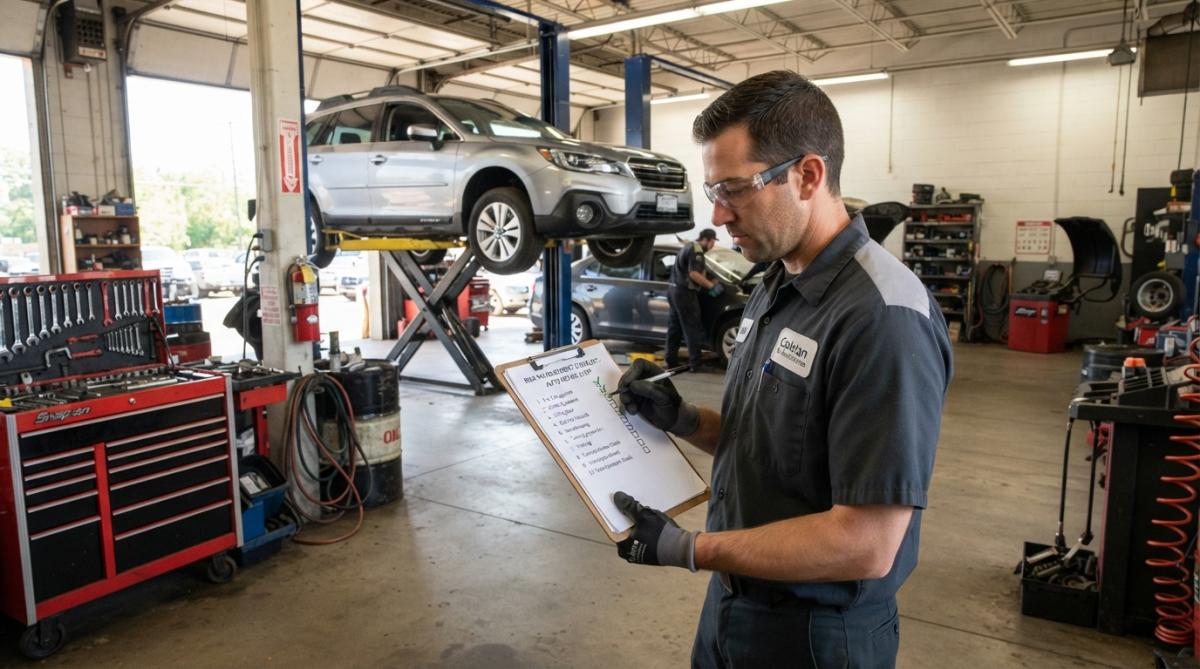
The coverage includes protection for liability claims, property damage to your building and tools, employee injuries, and damage to customer vehicles in your care. Many shop owners assume their general liability policy covers everything. It doesn’t. A customer’s car damaged during service, tools stolen from your shop, or an employee injured under a lift requires specific coverage that only commercial insurance for auto repair shops provides.
Why Auto Repair Shops Need Specialized Coverage
Most business owners assume their general liability policy handles everything. This assumption costs repair shops thousands in uncovered claims every year.
The problem is straightforward: general liability policies are written for offices and retail stores, not businesses physically handling customer property worth thousands of dollars. When you’re working on a vehicle worth $15,000 or more, a slip-up, a scratch during service, a spill damaging the interior, accidental transmission damage, becomes a claim that a standard policy won’t cover.
Employee safety adds another layer of complexity. Your mechanics work around heavy equipment, lifts, hydraulic systems, and sharp tools. Workers’ compensation is legally required in all 50 states when you have employees, but standard workers’ comp doesn’t cover all specific hazards of automotive work.
Then there’s the customer vehicle itself. While the vehicle sits in your shop, you’re liable for theft, weather damage, or damage caused during service. That’s where garage keepers liability comes in, coverage that standard policies simply don’t include.
State licensing boards, customer contracts, and insurance requirements for financing companies all expect you to carry specific types of coverage. Operating without it exposes you to fines, license suspension, and legal liability that could shut down your operation.
General Liability Insurance for Mechanics: Protecting Your Core Operations
General liability insurance for mechanics covers bodily injury and property damage claims that arise from your service operations. This is your first line of defense when a customer claims you caused harm.
What General Liability Covers
General liability insurance for mechanics covers bodily injury claims (a customer injured on your property), property damage claims (damage to customer property other than the vehicle you’re servicing), advertising injury claims, and medical payments for immediate treatment regardless of fault.
What it does NOT cover is damage to the customer’s vehicle while you’re servicing it. That requires garage keepers liability. If you accidentally damage a transmission seal during service and the transmission fails later, that claim falls outside general liability.
Check your policy’s definition of “auto repair services.” Some carriers exclude certain types of work (custom fabrication, collision repair, transmission work) from coverage entirely. Know what your policy actually covers before you need it.
Liability Limits and Deductibles
Common liability limits for repair shops are $100,000 per incident / $300,000 aggregate (small shops), $250,000 per incident / $500,000 aggregate (mid-size shops), or $500,000 per incident / $1,000,000 aggregate (larger shops with higher-risk work).
Your deductible typically ranges from $500 to $2,500. A higher deductible lowers your premium but means you absorb more cost when a claim happens. Most shop owners find that a $1,000 deductible balances affordability with reasonable risk management. Your insurance agent should help you assess the right limit based on your customer base, work complexity, and vehicle values you service.
Garage Keepers Liability Insurance: Protecting Customer Vehicles
Garage keepers liability is specifically designed to cover damage to customer vehicles while they’re in your care, custody, or control. This is the coverage that stops most repair shops cold when they first understand what it does.
Coverage for Customer Vehicle Damage
Garage keepers liability covers damage to customer vehicles that happens on your property or during service, including collision damage from lifts or equipment, theft and vandalism, weather damage, damage during service, and employee negligence.
This coverage is critical because your general liability policy explicitly excludes damage to property you’re working on. Without garage keepers liability, a $3,000 paint job mistake becomes your liability to cover out of pocket.
The coverage typically includes both "on premises" (damage at your shop) and "off premises" (mobile service or pick-up/delivery). Most shop owners need both.
Many repair shops carry garage keepers liability with a $5,000 or $10,000 limit, thinking that’s sufficient. A single high-end vehicle damaged during service can exceed that limit by 10 times. Ensure your garage keepers limit matches the value of the most expensive vehicles you service regularly.
Workers’ Compensation Auto Repair Shop: Employee Protection Requirements
Workers’ compensation is legally required in all 50 states if you have employees. For auto repair shops, it’s essential because your work environment carries higher injury risk than most industries.
Your employees face hazards from heavy equipment, hydraulic systems, sharp tools, repetitive strain injuries, and chemical exposure. Workers’ comp covers medical treatment, lost wages, and disability benefits when an employee is injured on the job.
The cost is typically calculated as a percentage of your payroll, usually 15-25% for auto repair shops, depending on your state and work type. A shop with $500,000 in annual payroll might pay $75,000-$125,000 annually.
Workers’ comp covers only employees, not independent contractors or business owners. Misclassifying someone as a contractor to avoid workers’ comp creates massive liability exposure and can result in back-pay liability, fines, and criminal charges.
Auto Repair Shop Insurance Cost: What Affects Your Premium
Your insurance premium is based on specific factors that insurance companies use to assess your risk profile.
Risk Assessment Factors
Insurance carriers evaluate your shop using several key metrics: loss history (your claims record over 3-5 years; one major claim can increase your premium by 25-50%), type of work performed (transmission rebuilds carry higher risk than tire rotations), safety practices (documented protocols and training earn discounts), customer vehicle values (luxury vehicles mean higher exposure), and shop condition (clean, organized shops with proper security present lower risk).
Shop Size and Revenue
A one-person operation with $150,000 annual revenue might pay $1,200-$2,000 annually for basic coverage. A 10-person shop with $2 million in revenue might pay $8,000-$15,000 annually. Larger shops often qualify for volume discounts that smaller shops don’t, though per-revenue-dollar costs are often lower.
The single biggest factor affecting your premium is your loss history. A shop with no claims in five years will pay 30-40% less than a shop with multiple claims. This makes risk management and claims prevention your highest-ROI investment.
Essential Coverage Beyond the Basics
General liability, garage keepers, and workers’ compensation are the foundation. But they’re not sufficient for most repair shops operating in 2026.
Commercial Property and Tools Equipment
Your building, equipment, and tools represent significant assets. A fire, theft, or natural disaster can shut down your operation for weeks or months.
Commercial property insurance covers building damage, equipment and machinery, tools and diagnostic equipment, inventory and parts, and business interruption (lost income while unable to operate). A modern diagnostic scanner costs $5,000-$15,000. A set of lifts might cost $20,000-$50,000. Tools and equipment floaters are add-ons that cover tools used on customer premises or in mobile service.
Commercial Auto and Hired Non-Owned Auto
If your shop operates service vehicles, a tow truck, or a mobile diagnostic unit, you need commercial auto insurance. This covers liability and physical damage for business vehicles.
Hired and non-owned auto (HNOA) coverage covers vehicles you rent or borrow for business purposes and vehicles your employees drive for business that aren’t owned by your company. Many shops discover this gap only after an accident involving a borrowed vehicle.
Cyber Liability for Modern Auto Shops
Modern auto shops collect customer data: phone numbers, email addresses, credit card information, vehicle history. Many shops use cloud-based diagnostic systems and shop management software. A data breach or ransomware attack can expose customer information and shut down operations.
Cyber liability insurance covers data breach notification and legal costs, ransomware recovery and extortion payments, business interruption from system downtime, customer notification and credit monitoring costs, and regulatory fines and penalties. The cost is typically $500-$2,000 annually. It’s one of the fastest-growing coverage areas for service businesses because the threat is real and growing.
Business Interruption Coverage
Business interruption insurance covers your lost income if you’re unable to operate due to an insured event like fire or natural disaster.
Without this coverage, a two-week shutdown means two weeks of fixed costs (rent, utilities, employee salaries) with zero revenue. For a shop with $10,000 in monthly overhead, that’s $20,000 in unrecovered costs, plus lost profits. Business interruption coverage pays your normal operating profit during the shutdown period, typically for 12-24 months.
Insurance for Specialized Shops: EV and Hybrid Repair
If your shop services electric vehicles or hybrids, your insurance needs differ from traditional repair shops.
EV and hybrid repair carries specialized hazards: high-voltage systems operating at 400+ volts (improper handling causes electrocution or fire), battery damage claims (a damaged battery pack costs $5,000-$15,000 to replace), fire risk (lithium battery fires are harder to extinguish), specialized equipment (EV diagnostic tools are expensive), and employee training requirements (staff need specific certifications).
Many standard insurance policies exclude or limit coverage for EV repair work. If you’re adding EV service, notify your insurance agent immediately. You’ll likely need endorsements to your existing policy or a separate specialized EV repair policy. Carriers often charge 25-50% premiums for EV work due to the unfamiliar risk profile.
Shops with 1-3 technicians doing primarily routine EV maintenance can often add EV coverage to existing policies. Shops doing battery work, high-voltage repairs, or collision work on EVs need dedicated EV shop insurance.
Protecting your auto repair shop means understanding the specific risks you face, building a coverage plan that addresses those risks, and choosing an insurance partner who understands your business.
At Colstan & Associates, we specialize in commercial insurance for auto repair shops. Our team has worked with repair shops across the country to build coverage that fits their actual operations, not a generic policy that leaves gaps when claims happen. We handle the complexity of garage keepers liability, workers’ compensation, and specialized coverage so you can focus on running your shop. Start a quote with Colstan & Associates today and discover how much you could save while getting coverage that actually protects what you’ve built.
| Coverage Type | What It Covers | Typical Limit | Key Gap |
|---|---|---|---|
| General Liability | Bodily injury, property damage on your premises | $250,000-$500,000 per incident | Excludes damage to customer vehicles |
| Garage Keepers Liability | Damage to customer vehicles in your care | $50,000-$250,000 per incident | Requires separate policy; not included in general liability |
| Workers’ Compensation | Employee injuries, medical, lost wages | Statutory limits by state | Covers only employees, not contractors |
| Commercial Property | Building, equipment, tools, inventory | Replacement value of assets | Doesn’t cover business income during shutdown |
| Commercial Auto | Service vehicles, liability, physical damage | $100,000-$500,000 | Excludes personal use of business vehicles |
| Cyber Liability | Data breach, ransomware, system downtime | $250,000-$1,000,000 | Requires active data collection; often overlooked |
Frequently Asked Questions
What types of insurance do auto repair shops need?
Auto repair shops typically need general liability insurance, garage keepers liability insurance, workers' compensation, commercial property insurance, and commercial auto insurance. Many shops also benefit from tools and equipment coverage, cyber liability, and business interruption insurance. The specific combination depends on your shop's size, services offered, and risk profile. A personalized assessment with an experienced insurance agent can identify coverage gaps and ensure comprehensive protection for your business.
How much does commercial insurance for an auto repair shop cost?
Commercial insurance costs vary significantly based on shop size, revenue, number of employees, claims history, location, and the types of services you offer. Risk assessment factors, including shop safety practices and service specialization, also influence premiums. Rather than guessing, contact an insurance provider for a customized quote that reflects your specific business. Colstan & Associates can evaluate your needs and find competitive rates tailored to your shop's profile.
What is garage keepers liability insurance?
Garage keepers liability insurance protects your shop when customer vehicles are damaged while in your care. This coverage applies to damage caused by your employees, equipment, or shop operations, not customer negligence. It covers repair costs, rental vehicle expenses, and related losses. This is essential coverage for any auto repair shop, as customer vehicle damage is one of the most common claims. It typically complements general liability and is often included in business owners policies designed for automotive shops.
Is workers' compensation required for auto repair shops?
Workers' compensation requirements vary by state. Most states require employers with a certain number of employees (often three or more) to carry workers' compensation insurance. Even in states where it's not mandated, carrying this coverage protects your business from employee injury claims and demonstrates professional responsibility. It covers medical expenses, lost wages, and disability benefits for injured employees. Check your state's specific requirements and consult with an insurance agent to ensure compliance and adequate protection.
What should I look for when choosing an auto repair shop insurance provider?
Look for providers with experience in the automotive repair industry who understand shop-specific risks. Compare coverage options, liability limits, deductibles, and premium costs. Check the carrier's financial stability and customer service reputation. Ask about policy customization options and whether they offer discounts for safety programs or multi-policy bundling. Request quotes from multiple providers to compare. Colstan & Associates specializes in commercial insurance for repair shops and offers personalized service with access to multiple carriers and competitive rates.
What is cyber liability insurance and why do auto repair shops need it?
Cyber liability insurance protects your shop from data breaches, ransomware attacks, and other digital threats. Modern auto repair shops store customer information, payment data, and vehicle records digitally. A cyber incident can expose sensitive data, disrupt operations, and damage your reputation. Cyber liability covers breach notification costs, legal fees, credit monitoring services, and business interruption losses. As shops increasingly use digital tools and connected diagnostic equipment, cyber liability has become an essential coverage component for risk mitigation.
How does the claims process work for auto repair shop insurance?
When you file a claim, contact your insurance carrier immediately with details about the incident. Document the damage with photos and gather relevant information (date, time, parties involved, witnesses). Submit your claim form and supporting documentation to your carrier. An adjuster will review the claim, assess damage or liability, and determine coverage eligibility. You'll receive updates on claim status and, once approved, payment according to your policy terms. Working with a responsive insurance provider ensures timely communication and faster resolution throughout the claims process.
This article was written using GrandRanker