


08 Oct Farm and Ranch Commercial Insurance Quotes: 2026 Guide
Table of Contents
- Why Farm and Ranch Commercial Insurance Quotes Vary So Much
- Farm Insurance Quote Requirements: What You’ll Need Before You Call
- Farm and Ranch Insurance Coverage: What a Commercial Policy Actually Includes
- Commercial Agribusiness Insurance: When Farm Policies Fall Short
- How Premiums Are Calculated for Farm and Ranch Policies
- Farm and Ranch Insurance Comparison: A Checklist for Weighing Quotes
- Common Mistakes That Drive Up Your Quote
- Conclusion: Getting the Right Quote Starts With the Right Questions
- Frequently Asked Questions
Last Updated: October 8, 2026
Why Farm and Ranch Commercial Insurance Quotes Vary So Much
Two neighboring operations with the same acreage can receive farm and ranch commercial insurance quotes that differ by thousands of dollars a year. The gap rarely comes down to the agent.
At Colstan & Associates, we’ve spent over 20 years helping agricultural businesses sort through those differences.
Here’s what most quote comparisons miss: you aren’t comparing prices. You’re comparing how each policy defines a loss.
The most common mistake we see is comparing quotes by premium alone. A quote that saves $800 a year but excludes custom harvesting work for others can cost you far more than that in a single liability claim.
Farm Insurance Quote Requirements: What You’ll Need Before You Call
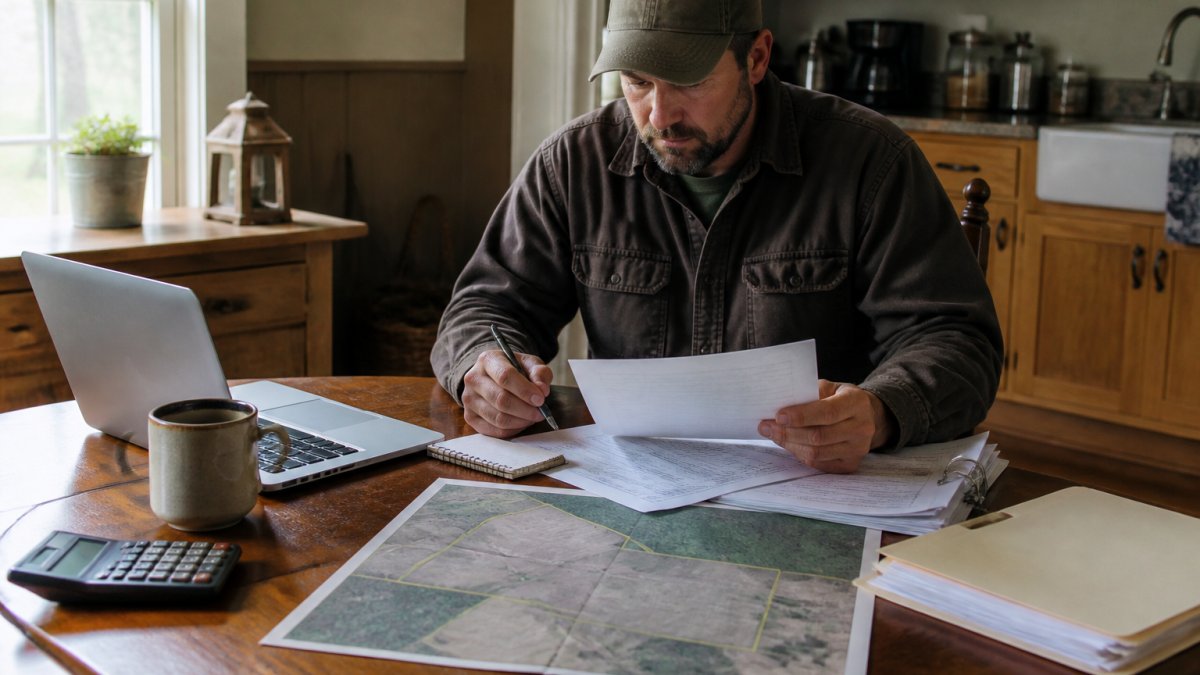
Accurate farm insurance quote requirements start with documentation, not conversation. The more precisely you can describe your operation, the more accurate every quote will be.
Agents who receive vague details have to build in assumptions. Those assumptions almost always push the premium up, or leave gaps you discover only after a loss. Gather your information first.
Documents and Details to Have Ready
- Property legal descriptions and acreage for each parcel
- Schedule of farm buildings with construction type, age, and replacement value
- Farm equipment list with year, make, model, and current value
- Livestock inventory by type and head count
- Revenue breakdown by activity, including any custom work for neighbors
- Payroll figures and number of employees
Farm and Ranch Insurance Coverage: What a Commercial Policy Actually Includes
Farm and ranch insurance coverage is a package of protections built around agricultural operations, typically combining property, liability, and livestock or equipment coverage in one policy. A commercial farm policy generally covers four core areas, but the depth of that coverage varies dramatically from carrier to carrier. Evaluating how these policies account for specialized ranch steel structures ensures that your physical assets remain fully protected against unforeseen structural failures.
Property, Liability, and Livestock Protection
Farm property coverage protects buildings, barns, sheds, fencing, and stored equipment against covered perils. Commercial general liability responds when someone is injured on your property or when your operation causes damage to others. Livestock coverage addresses death or loss of animals from covered causes. Farm equipment coverage handles tractors, implements, and vehicles used in the operation.
Each piece carries its own limit and deductible. That’s why two quotes with the same total premium can behave completely differently when you file a claim. According to the USDA Risk Management Agency, federal crop programs and private coverage serve different purposes, and understanding which risk each one addresses prevents gaps.
How Limits, Deductibles, and Exclusions Differ Across Quotes
The real comparison isn’t the coverage category list, it’s the numbers behind each category. Here’s what to pull from every quote and compare side by side:
| Coverage Element | What to Compare | Why It Changes Your Outcome |
|---|---|---|
| Property limit | Replacement cost vs. actual cash value | ACV pays depreciated value; replacement cost pays what it takes to rebuild or replace |
| Liability limit | Per-occurrence vs. aggregate | A $1M per-occurrence limit with a $2M aggregate caps total annual payouts differently than a $1M/$1M structure |
| Deductible | Flat vs. percentage-based | A 2% wind/hail deductible on a $500,000 barn means $10,000 out of pocket before coverage kicks in |
| Livestock coverage | Named-peril vs. blanket | Named-peril covers only listed causes; blanket covers all causes unless excluded |
| Equipment coverage | Scheduled vs. blanket | Scheduled lists each item with a value; blanket covers all equipment up to a single limit |
| Excluded activities | Custom work, processing, agritourism | If your revenue depends on an excluded activity, the policy won’t respond to that loss |
A quote with a $2,500 deductible and a $500 deductible are not the same product, even if the coverage categories look identical. The same applies to a policy that covers livestock on a named-peril basis versus one that covers all causes unless excluded. Those differences don’t show up in the premium line, they show up at claim time.
Ask each carrier to show the property limit, liability limit, and deductible side by side before you compare premium. Then ask one more question: “What activities are excluded?” The answer often reveals whether the quote actually fits your operation.
Common Exclusions That Catch Farm Operations Off Guard
Most farm policies exclude or sublimit certain activities unless you add an endorsement. Common examples include:
- Custom work for others, harvesting, spraying, or hauling for neighboring farms
- Processing and packing, turning raw commodities into finished goods for sale
- Agritourism, farm stands, corn mazes, events, or on-site retail
- Commercial hauling, transporting goods in vehicles not listed on the policy
- Pollution, fertilizer, pesticide, or fuel spills
If any of these describe your operation, the quote needs to reflect that activity explicitly. Otherwise you’re paying for coverage that won’t respond when it matters.
Commercial Agribusiness Insurance: When Farm Policies Fall Short
Commercial agribusiness insurance picks up where a standard farm policy stops. Once your operation grows beyond direct-to-consumer sales, several activities fall outside a typical farm form.
Consider what triggers the gap:
- Processing or packing your own or others’ products
- Selling to distributors or retail chains
- Custom harvesting or spraying for neighboring farms
- Agritourism, farm stands, or events on the property
- Hauling products in commercial vehicles (Source: Small Business Administration (SBA) resources)
Each of these introduces business risks a farm policy wasn’t written to cover. If your revenue depends on any of them, your quote needs to reflect that activity explicitly. Otherwise you’re paying for coverage that won’t respond when it matters.
How Premiums Are Calculated for Farm and Ranch Policies
Premiums come from a carrier’s assessment of how likely you are to file a claim and how much that claim would cost. No single factor decides it, but several carry real weight. Understanding how each factor moves the number helps you see why two quotes for similar operations can differ by thousands.
The Rating Factors That Move Your Premium
Carriers typically weigh these factors, and each one can shift your premium up or down:
| Factor | How It Affects Premium | What You Can Control |
|---|---|---|
| Total insured value | Higher property, equipment, and livestock values mean higher premium | Accurate valuations prevent overpaying for coverage you don’t need |
| Claim history | Prior losses signal higher future risk | Fewer claims over time can improve your rate |
| Construction type and age | Older or wood-frame buildings cost more to insure | Updates and renovations can lower the rate |
| Geographic exposure | Weather, wildfire, and wind risk vary by location | Limited, but mitigation like firebreaks or storm shutters may help |
| Activities listed | Custom work, processing, or agritourism add risk | Disclose accurately; hiding activities creates gaps, not savings |
| Deductible and limits | Higher deductible lowers premium; lower limits do the same | Choose based on how much risk you can absorb |
How Deductibles and Limits Change the Math
Raising a deductible lowers premium but shifts more of each loss onto you. Lowering a limit does the same.
Consider a common trade-off: a $1,000 deductible might carry a premium of $8,000, while a $5,000 deductible drops it to $6,500.
The same logic applies to limits. A $500,000 property limit costs less than a $1,000,000 limit, but if your barn and equipment are worth $750,000, the lower limit leaves you underinsured.
Why Two Similar Operations Get Different Quotes
Two neighboring operations with the same acreage can receive quotes that differ by thousands because carriers weigh factors differently. One carrier may weight claim history heavily; another may focus on construction type.
That’s why comparing quotes by premium alone misses the point. The quote that wins on price may lose on coverage depth, deductible structure, or excluded activities. We walk clients through that trade-off rather than defaulting to the lowest number.
Premium is the output of a formula, not a single number. Change the inputs, deductible, limits, activities disclosed, and you change the price. The goal isn’t the lowest premium; it’s the right balance of cost and protection for your operation.
Farm and Ranch Insurance Comparison: A Checklist for Weighing Quotes
A farm and ranch insurance comparison only works if you compare the same things across every quote. Premium is one line. The rest decides whether the policy performs.
Coverage Limits, Exclusions, and Deductibles Side by Side
| What to Compare | Why It Matters | What to Watch For |
|---|---|---|
| Property limit | Sets the ceiling on building and equipment claims | Actual cash value vs. replacement cost |
| Liability limit | Caps payout for injury or damage claims | Per-occurrence vs. aggregate |
| Deductible | Your out-of-pocket share of each loss | Separate deductibles per coverage part |
| Livestock coverage | Determines which animals and causes are covered | Named-peril vs. blanket coverage |
| Excluded activities | Lists what the policy will not cover | Custom work, processing, agritourism |
| Equipment coverage | Covers tractors and implements | Scheduled vs. blanket basis |
Run every quote through this grid before you decide. A quote that wins on premium but loses on three rows isn’t the better policy.
The quote with the lowest premium is rarely the cheapest policy. Compare limits, deductibles, and exclusions first, then let premium break the tie.
Common Mistakes That Drive Up Your Quote
Most inflated quotes trace back to the same handful of errors, and every one is avoidable.
Underreporting values to lower premium backfires at claim time, when the payout falls short of replacement. Leaving off a commercial activity, like selling processed goods or doing custom work, creates a coverage gap the carrier never priced.
A quick review before you request quotes fixes all four. Accuracy lowers premium more reliably than trimming coverage does.
Conclusion: Getting the Right Quote Starts With the Right Questions
The right farm and ranch commercial insurance quotes come from asking better questions, not chasing the lowest number. Know your operation, document it precisely, and compare policies on limits, exclusions, and deductibles before you compare price.
That’s where Colstan & Associates helps. As a family-owned agency with licensed agents in 23+ states, we build coverage around your actual operation and review it at every renewal so nothing slips.
Frequently Asked Questions
What does farm and ranch insurance cover?
A farm and ranch insurance policy typically bundles several protections: commercial property coverage for barns, equipment, and stored crops; general liability for injuries or property damage to others; livestock and equine coverage; and often farm dwelling protection if a home sits on the property. Many policies also include limited coverage for farm vehicles and equipment. Because every operation is different, the exact scope depends on your acreage, buildings, animals, and whether you sell products commercially. A local agent can walk through your specific setup and flag gaps before you sign.
What information do I need to get a farm insurance quote?
Before requesting a quote, gather your legal entity name and contact details, property address and acreage, a list of buildings with construction type and age, an inventory of equipment and vehicles, the number and type of livestock or horses, annual revenue or production volume, and any prior loss history. If you have an existing policy, have the declarations page handy so the agent can compare coverage side by side. Having these details ready speeds up the process and helps ensure the quote reflects your actual farm operations rather than a generic estimate.
How can I compare farm and ranch insurance quotes fairly?
Comparing quotes means looking beyond the bottom-line number. Check the coverage limits for property, liability, and livestock; review exclusions for things like equipment breakdown or pollution; and compare deductibles and how claims are settled. Ask each agent whether the policy includes farm equipment coverage, whether commercial growers and packers operations are eligible, and how the insurer handles seasonal changes in inventory. A quote comparison checklist that scores each policy on coverage, exclusions, and service responsiveness will give you a clearer picture than price alone.
What factors affect farm and ranch insurance quotes?
Several factors drive your premium: the size and location of your property, the types of buildings and their condition, the value and type of equipment, the number and breed of livestock or horses, your annual revenue, and your claims history. Insurers also weigh whether you operate as a family farm, an estate farm, or a commercial agribusiness, since each carries different business risks. Proximity to fire stations, local weather patterns, and whether you host public events or agritourism also play a role. Because these factors vary widely, two similar farms can receive very different quotes.