


16 Sep How Long Does It Take to Get Custom Insurance?
Table of Contents
- What Determines How Long It Takes to Get Custom Insurance
- Steps to Purchase a Custom Policy, From Quote to Coverage
- The Underwriting Process for High-Value Assets
- Documentation for Personalized Asset Protection
- Insurance Policy Binding Timeline: When Coverage Actually Starts
- What Slows Down Custom Insurance Approval
- How to Speed Up Your Custom Insurance Application
- Frequently Asked Questions
Last Updated: September 10, 2026
What Determines How Long It Takes to Get Custom Insurance
Most personal custom insurance policies can bind relatively quickly; complex commercial or high-value policies typically take longer. The deciding factors are policy type, documentation completeness, and how fast an underwriter verifies details.
A custom insurance policy is a tailored contract built around assets or risks standard carriers will not cover on a generic form, such as a classic car collection, a high-value home, or a business with unusual liability exposure. Because nothing about it is off-the-shelf, the timeline depends on how much an underwriter has to learn about you. At Colstan & Associates, we have over 20 years of dedicated service in the insurance industry, helping clients navigate the process.
The common advice that you can always “get covered in 15 minutes” does not apply here. That promise belongs to standard auto and renters products with fixed rates. Custom policies require a conversation, a submission, and a review.
Personal Lines vs. Commercial Custom Policies
Personal custom insurance moves faster than commercial coverage. A high-value homeowners or classic car policy usually involves one property or vehicle, a documented value, and a single decision-maker. Commercial custom policies carry more moving parts: multiple locations, payroll figures, subcontractor exposure, and sometimes several carriers.
That gap in complexity explains most of the difference in turnaround time. A personal policy might bind the same day an inspection is completed; a commercial liability policy for a shop or restaurant often needs loss runs, a site review, and a formal quote first.
Personal custom policies can often bind relatively quickly. Commercial custom policies usually take longer because they involve more documentation and more than one carrier review.
Steps to Purchase a Custom Policy, From Quote to Coverage
Buying a custom policy follows a predictable sequence. Knowing the steps helps you anticipate delays.
- Initial consultation. You describe your assets, your risks, and your coverage goals. A licensed agent asks about values, usage, and any prior claims.
- Submission and premium quote. The agent submits your details to the right carrier and returns a premium quote with proposed liability limits and deductible options.
- Documentation collection. You provide proof of value, driving history, and property details. This is where most delays begin.
- Underwriting review. The carrier performs a risk assessment, which may include a motor vehicle report, a property inspection, or a manual review of commercial operations.
- Approval and policy issuance. Once the underwriter approves, the carrier issues the policy and generates your declarations page.
- Premium payment and binding. You pay the first premium, and coverage becomes active.
Documentation collection and underwriting review are the two steps that most often stall; everything else moves quickly once those are complete.
Online Applications vs. Working With an Agent
An online portal works well when your situation fits a standard template: enter your vehicle identification number, answer a few questions, and the system returns a rate. For a single modern car or a straightforward renters policy, that is the fastest path.
That model breaks down the moment your asset is unusual. A classic car with a modified engine, a home with a replacement cost well above the neighborhood average, or a towing company with a fleet and a storage yard cannot be priced by an algorithm alone. These cases need a human who knows which carrier will write them.
Working with an agent also means someone is tracking your file. When an underwriter requests a document, the agent follows up. When a carrier declines, the agent knows where to resubmit. That oversight is the difference between a policy that binds in two days and one that sits untouched for two weeks.
The Underwriting Process for High-Value Assets
The underwriting process for high-value assets is where a carrier decides whether your risk fits its appetite and at what premium. For a standard policy this is largely automated; for a custom policy, a person reviews your file, pulling data from sources you may not know exist.
Underwriters look at three things: the value of the asset, the likelihood of a claim, and the severity if one occurs. A classic car stored in a climate-controlled garage presents a very different profile than the same car driven daily in traffic. A restaurant with a fryer line and a full bar carries more liability exposure than a coffee shop serving pastries.
What Underwriters Actually Check
The review is a series of database pulls and third-party verifications, each of which can add time or trigger a denial:
- Motor vehicle reports (MVRs). Every listed driver gets a pull from state DMV records. A recent at-fault accident, a DUI, or a lapse in coverage can push the file into a specialty market, which restarts the clock (iii.org).
- CLUE reports (Comprehensive Loss Underwriting Exchange). This LexisNexis claims-history database shows every property and auto claim tied to you or your address for the past several years. If a claim appears that you did not disclose, the underwriter will question the application, even if the claim was not your fault.
- ISO loss runs. For commercial policies, carriers order loss runs from ISO (Insurance Services Office) to see your business’s claims history across all prior carriers. Missing or incomplete loss runs are a common reason a commercial quote stalls.
- Property inspections. High-value homes and commercial locations often require a physical inspection or photo verification, which can add several days on its own.
- Appraisal review. For classic cars, fine art, or high-value homes, the carrier may require an independent appraisal or accept a recent one. If the appraised value does not match the requested coverage limit, the file goes back for clarification.
Digital Verification Delays
A newer and often overlooked source of friction is real-time digital verification. Carriers increasingly pull data electronically at the point of application, and when a record does not match, the file pauses until a human resolves it. Common mismatches:
- A VIN that does not align with the stated trim or model year
- A driving record that has not updated after a ticket was dismissed
- A property address that does not match county assessor records
- A business name that does not match state registration filings
These mismatches do not mean you are denied, they mean the automated system cannot confirm the risk, so a person has to step in. That step can add one to three business days per mismatch. The fix is usually simple: provide the corrected document or a letter of explanation. The delay is the cost.
Submitting an application with an estimated value instead of a documented one is the single most common cause of a stalled custom policy. The underwriter will send it back, and you restart the clock.
Commercial vs. Personal Underwriting Timelines
Personal custom policies move faster because there is one decision-maker and one asset. Commercial custom policies carry more moving parts: multiple locations, payroll figures, subcontractor exposure, and sometimes several carriers. Personal policies can often bind relatively quickly; commercial policies usually take longer.
High-Risk Driver Timelines
A high-risk driver profile adds time because it changes which carriers will even consider the risk. A recent at-fault accident, a lapse in coverage, or a serious violation can push an application from a standard carrier to a specialty market, and that resubmission restarts the underwriting clock. If the state requires an SR-22 filing, the carrier must also coordinate with the DMV. Expect the process to take some time.
Documentation for Personalized Asset Protection
Documentation for personalized asset protection is the paperwork that proves what you own and how you use it. Complete documents up front are the fastest route to approval, but what you need depends on whether you are insuring a personal asset or a business risk.
Personal Lines Documentation
For most personal custom policies, gather the following before you apply:
- Proof of ownership or title for vehicles and property
- Recent photographs showing condition and storage
- Appraisals or receipts establishing replacement value
- Driving records for every listed driver
- Claims history for the past several years
A common mistake is treating an appraisal as optional. For a classic car or high-value home, the appraisal often sets your coverage limit; without it, the carrier either assigns a conservative value or asks you to get one, and either outcome costs you time. (Source: Small Business Administration (SBA) resources on business insurance)
Commercial Lines Documentation
Commercial custom policies require everything above plus deeper business records, so the carrier can understand your operations, payroll, and loss history across all prior carriers. Expect to provide:
- Loss runs from your current and prior carriers for the past three to five years
- Payroll figures by class code and job description
- A description of operations, including subcontractor use and any hazardous materials
- Certificates of insurance for subcontractors
- Financial statements or tax returns for larger risks
- A site plan or photos of the business location
Missing loss runs are a common reason a commercial quote stalls. If you changed carriers recently, request loss runs from the prior carrier early, they can take several days to arrive.
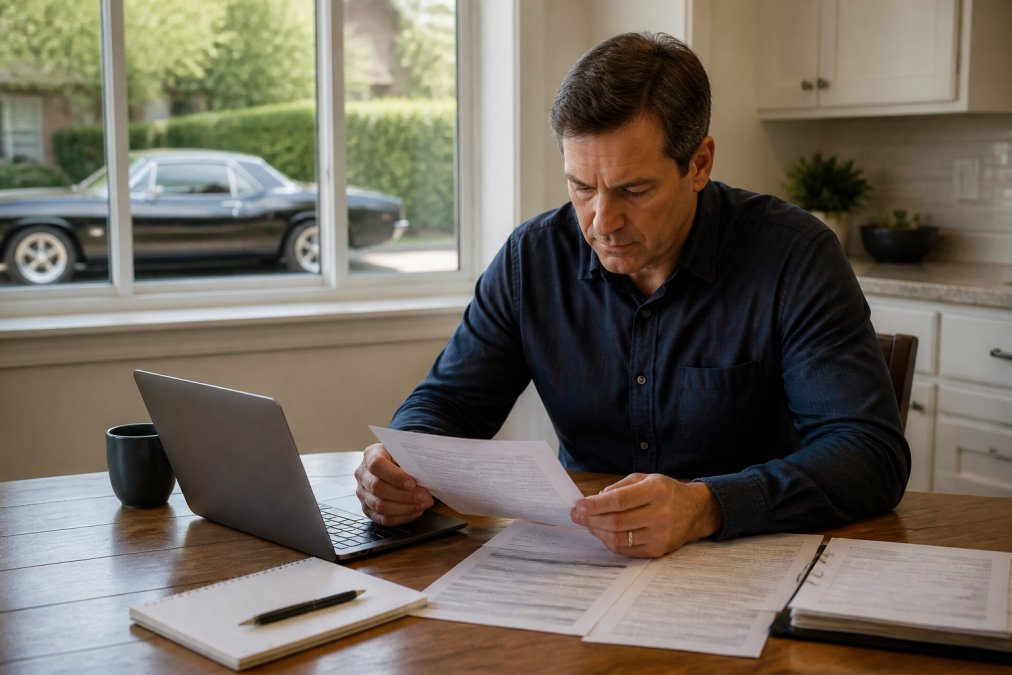
Digital Verification and Documentation Mismatches
Even with complete documents, digital verification can cause delays. Carriers pull data from third-party databases, CLUE reports, MVRs, county assessor records, and state business registries, and when a record does not match your application, the file pauses. Common mismatches:
- A VIN that does not align with the stated trim or model year
- A driving record that has not updated after a ticket was dismissed
- A property address that does not match county assessor records
- A business name that does not match state registration filings
These mismatches do not mean you are denied, they mean the automated system cannot confirm the risk, so a person has to step in. That step can add one to three business days per mismatch. The fix is usually simple: provide the corrected document or a letter of explanation. The delay is the cost.
Policy Endorsement Turnaround
If you already have a policy and need to modify it, adding a vehicle, increasing limits, or adding an additional insured, that is an endorsement, not a new application. Endorsements are usually faster, often completed relatively quickly. If the change significantly alters the risk profile, the carrier may require underwriting review. Ask your agent whether the change is a simple endorsement or a full re-underwrite.
The National Association of Insurance Commissioners consumer resources explain how policyholders can verify a carrier’s licensing and complaint history, which is worth checking before you commit to a long underwriting process.
Insurance Policy Binding Timeline: When Coverage Actually Starts
The insurance policy binding timeline answers the question everyone asks last and should ask first: when does coverage actually begin? Binding is the moment your policy becomes active, and it does not happen until the premium is paid and the carrier confirms.
An insurance binder is a temporary document proving insurance while the full policy is issued. It can take effect immediately in many cases, which matters if you need to drive a newly purchased classic car home or open a business location on a deadline.
Your coverage effective date is stated on the binder and again on the declarations page. Any gap between when you need coverage and when the binder takes effect is uninsured, so ask your agent to confirm the exact start time before you take possession of an asset or open for business.
| Stage | Typical Timeline | What Triggers the Next Step |
|---|---|---|
| Consultation and quote | Same day | You approve the quote |
| Documentation collection | 1-5 days | Complete paperwork submitted |
| Underwriting review | 2-10 days | Underwriter approval |
| Policy issuance | 1-2 days | Carrier generates declarations page |
| Binding and premium payment | Same day | First premium paid |
What Slows Down Custom Insurance Approval
Most delays trace back to three sources: incomplete information, third-party verification, and risk profiles that need a second look. All are manageable if you know they are coming.
Manual review is the biggest single factor. When a policy falls outside a carrier’s automated guidelines, a person has to read it, and that person has other files. A commercial liability policy for an auto repair shop, for instance, may need a review of its storage practices, fluid disposal, and customer vehicle handling before a quote is issued.
Digital verification delays are a newer, often overlooked source of friction. Carriers increasingly pull data electronically, and when a record does not match, a VIN that does not align with the stated trim, or a driving record that has not updated, the file pauses until a human resolves it.
High-Risk Drivers and Complex Commercial Risks
A high-risk driver profile adds time because it changes which carriers will even consider the risk. A recent at-fault accident, a lapse in coverage, or a serious violation can push an application from a standard carrier to a specialty market, and that resubmission restarts the underwriting clock.
Complex commercial risks behave the same way. A towing company with heavy equipment, a restaurant with a full bar, or a shop handling hazardous materials all require a carrier that specifically writes that class of business. Finding the right market takes longer than quoting a policy you already know will be accepted.
How to Speed Up Your Custom Insurance Application
Speed comes from preparation, not pressure. Applicants who provide complete, accurate information and respond promptly to follow-up requests can help expedite the process.
- Order your appraisal before you apply, not after the underwriter asks
- Gather driving records and claims history for every listed driver up front
- Photograph your asset in its storage location with clear lighting
- Disclose modifications, prior claims, and business operations honestly
- Respond to underwriter questions within 24 hours
- Work with an agent who can tell you which carrier will actually write your risk
The last point matters more than most people expect. An agent who knows the market can skip carriers that will decline and go straight to the ones that will approve. That saves days, not hours.
For policyholders adjusting coverage after issuance, an endorsement is usually faster than a new application, often completed within a few business days. If your needs change, ask about an endorsement before assuming you need a new policy.
Insurance Information Institute guidance on how policies are priced and bound notes that coverage terms and pricing vary widely by carrier, which is why matching your risk to the right market shortens the process.
The challenge with custom insurance is not the coverage itself, it is the waiting. Files stall when documentation is incomplete, when verification hits a snag, and when the risk needs a carrier that actually writes it. Colstan & Associates is a family-owned agency with licensed agents in 23 or more states, a partnership with Hagerty Insurance for classic car coverage, and a client-first approach built on over 20 years of service, including recognition as Merchants Insurance Group’s 2024 Agent of the Year. We follow up on renewals, handle the paperwork, and match your risk to the right carrier. Get started with Colstan & Associates and find personalized protection.
Frequently Asked Questions
How long does it take for custom insurance to get approved?
A standard personal auto policy can often be quoted and bound relatively quickly. Custom insurance for high-value assets usually takes longer because the carrier reviews documentation, verifies values, and completes a risk assessment before issuing a premium quote. Timelines vary by carrier and asset type, so ask your agent for an estimate once your application is submitted.
What factors influence the underwriting timeline for custom insurance policies?
The main factors are asset type and value, how complete your documentation is, your driving history and claims history, and whether the carrier needs a manual review instead of an automated one. Commercial risks, high-value homes, and specialty vehicles typically take longer than a standard policy because more verification steps are involved.
How does the complexity of high-value assets affect insurance approval times?
Higher-value and unusual assets require more review. A carrier may need an appraisal, a VIN verification, or proof of storage and security before it will bind coverage. Each additional step adds time, so a collection of classic cars or a business with several locations will usually take longer to approve than a single family vehicle.
What documentation is required to expedite a custom insurance application?
Have your driver’s license, vehicle or property identification numbers, current declarations page, and claims history ready before you apply. For high-value items, include appraisals, photos, and receipts. Complete documentation for personalized asset protection reduces back-and-forth with the carrier and is one of the fastest ways to shorten the process.