


16 Sep Personalized Insurance for Families: A 2026 Guide
Table of Contents
- What Is Personalized Insurance for Families?
- How to Assess Your Family’s Insurance Needs
- Key Financial and Risk Management Benefits
- Insurance Policy Review Checklist for Families
- Tailoring Coverage to Life Transitions and Trigger Events
- Benefits of Individual Health Insurance Within Family Plans
- How Digital Tools Help Manage Personalized Policies
- Tax Implications and Premium Affordability
- Frequently Asked Questions
Last Updated: August 6, 2026
What Is Personalized Insurance for Families?
Personalized insurance for families is coverage tailored to your household’s specific circumstances, risks, and financial situation rather than applying a generic, one-size-fits-all policy. This approach means your protection reflects your actual life: your dependents, your assets, your income level, and the unique risks you face.
A standard policy covers broad categories. Personalized coverage fills the gaps in your specific situation. At Colstan & Associates, we’ve worked with families across the country who discovered their existing policies left them dangerously exposed in areas they never considered, or paying for coverage they didn’t need.
Personalized insurance considers life stage, family structure, asset value, income stability, and future goals. The process starts with a comprehensive assessment of what you’re actually protecting and what could go wrong. From there, coverage gets customized through policy riders, adjusted deductibles, modified coverage limits, and strategic combinations of products that work together instead of overlapping or leaving gaps.
How to Assess Your Family’s Insurance Needs
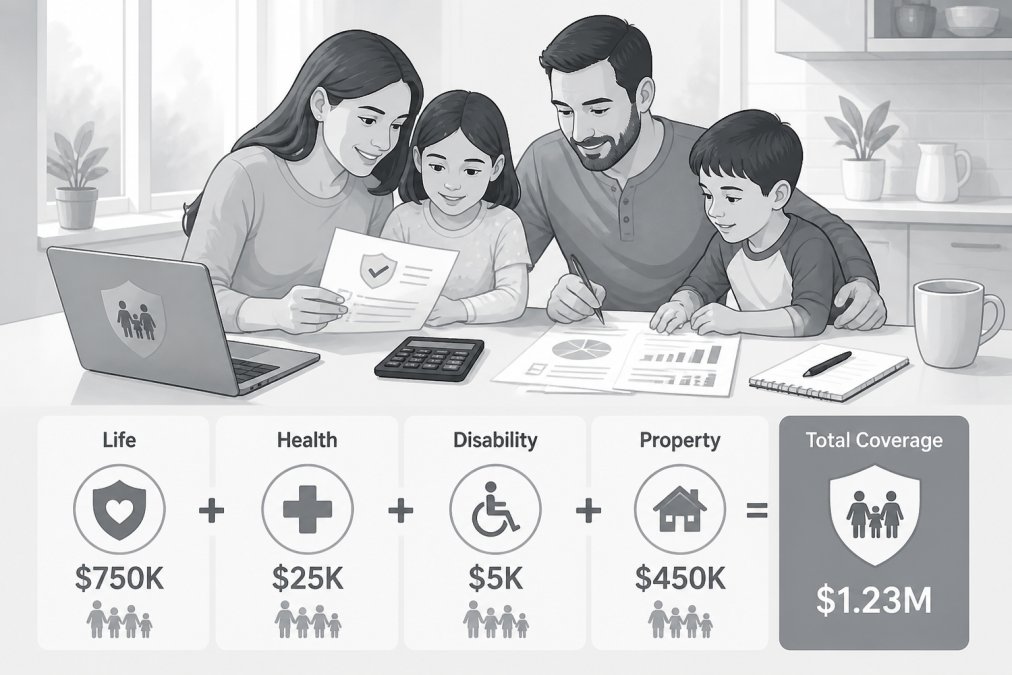
Assessing your family’s insurance needs requires a clear-eyed inventory of your financial obligations, assets, and the risks that could derail your family’s security.
Start by listing your family’s financial obligations: mortgage or rent, car loans, student debt, childcare costs, education plans, and ongoing living expenses. Calculate how many months your family could sustain itself if the primary earner became unable to work. Most financial advisors suggest having 6-12 months of expenses covered through disability insurance and emergency savings combined.
Next, inventory your assets: home value, vehicles, savings accounts, investment portfolios, business interests, jewelry, and collectibles. This determines how much liability coverage you need and what property insurance requirements make sense. High-net-worth families often find they’re significantly underinsured on personal liability because they haven’t updated coverage in years.
Consider your family’s health profile and unique risk factors. Pre-existing conditions, family health history, and anticipated medical needs should inform your health insurance choices. Do you have teenage drivers? Own a rental property? Have a home-based business? Each adds specific insurance needs that generic policies miss.
Evaluating Life Stage and Dependents
Your family’s life stage dramatically shapes insurance priorities. A young couple with no children faces entirely different risks than a family with three kids, a mortgage, and aging parents to support.
Early-stage families typically need solid disability insurance and adequate life insurance to cover debt and living expenses. Families with young children need higher life insurance coverage to replace income during the years when dependents can’t support themselves. Families with teenagers should review auto insurance carefully, as young drivers significantly increase accident risk and liability exposure. Families approaching retirement should consider long-term care insurance while decreasing life insurance needs.
Identifying Coverage Gaps in Your Current Plan
Coverage gaps are the silent risk in most family insurance situations. Common gaps include liability coverage limits that haven’t been updated in a decade. If you had a $300,000 liability limit on your homeowners policy in 2016, you still have it today unless you’ve actively increased it. Umbrella liability insurance fills this gap by adding an extra layer of protection beyond your standard homeowners and auto policies.
Health insurance gaps often hide in the details, such as inadequate specialist visit coverage or mental health services. Property coverage gaps emerge when you’ve added valuable items that standard policies don’t adequately cover, jewelry, art, and collectibles often have coverage limits far below their actual value. Disability income gaps happen when families assume they’re covered through employer policies without reviewing the actual benefit amount. Business-related gaps affect families where someone runs a home-based business, as your homeowners policy likely excludes business liability.
Key Financial and Risk Management Benefits
Personalized insurance delivers financial security by aligning your coverage directly with your actual financial exposure. Risk mitigation is the core benefit, insurance protects your family’s financial foundation from events that could otherwise be devastating. A serious illness, accident, or liability claim can wipe out years of savings and future earning potential.
Asset protection becomes increasingly important as your family accumulates wealth. Coordinated coverage with appropriate riders and umbrella policies protects the full scope of your assets from claims that exceed standard policy limits. Premium optimization means paying for the protection you actually need without overpaying for redundant coverage. Dependents’ financial security is protected when coverage includes adequate life insurance, disability insurance, and education funding mechanisms.
Insurance Policy Review Checklist for Families
A structured review process ensures you catch coverage gaps and opportunities to optimize your protection.
Coverage Limits Assessment
- Homeowners insurance coverage limit equals current home replacement cost (not just purchase price)
- Auto insurance liability limits reviewed in past two years
- Umbrella liability policy in place if household net worth exceeds $500,000
- Life insurance death benefit equals 5-10 times annual household income
- Disability insurance covers 60-80% of household income
Dependent Protection
- Life insurance beneficiaries updated and accurate
- Guardianship designated for minor children in policy documents
- Education funding mechanism in place (529 plans, life insurance, or other)
- Each dependent’s coverage needs reassessed annually or after major life change
Asset Inventory
- Home value updated to reflect current market value
- High-value items (jewelry, art, collectibles) documented with photos
- Scheduled personal property riders in place for items exceeding standard limits
- Business assets or rental property coverage reviewed separately from personal policies
Health Insurance Specifics
- Deductibles and out-of-pocket maximums reviewed for upcoming year
- Prescription medication coverage verified for current medications
- Mental health and behavioral health coverage evaluated
- Maternity benefits confirmed if family planning is relevant
Risk Factor Updates
- New teenage drivers added to auto insurance
- Business activities disclosed to insurance agent
- Home-based business liability coverage in place if applicable
- Rental property or investment real estate coverage separate from personal policies
- Hobby or collectible-related risks (classic cars, firearms, etc.) specifically covered
Policy Documentation
- Beneficiary designations current and aligned with estate plan
- Policy copies stored securely and accessible to family
- Annual statements reviewed for accuracy
- Claims procedures understood before they’re needed
Premium Optimization
- Deductibles adjusted based on emergency fund size
- Discounts reviewed (bundling, safety features, claims-free history)
- Quotes from multiple providers obtained in past two years
- Coverage compared to actual needs (eliminating redundancy)
Tailoring Coverage to Life Transitions and Trigger Events
Certain life events create immediate insurance needs that demand swift policy adjustments. Marriage triggers the need to update beneficiaries and reassess coverage based on combined household income and assets. Birth of a child immediately increases life insurance needs and makes disability insurance more critical. Home purchase requires homeowners insurance before closing and reassessment of liability coverage. Job change affects disability insurance, health insurance options, and life insurance through employer programs. Significant income increase means your coverage limits may no longer match your financial obligations. Retirement transforms insurance needs dramatically, with life insurance needs typically decreasing while long-term care insurance becomes relevant. Business launch requires specific liability coverage that personal homeowners policies explicitly exclude.

Benefits of Individual Health Insurance Within Family Plans
Health insurance is often treated as a single family unit decision, but individual coverage within a family structure can make sense in specific situations. Individual health insurance allows customization around one family member’s specific health needs. Specialized networks matter when family members have different healthcare preferences. Out-of-pocket cost optimization becomes possible when family members have dramatically different expected medical expenses. A young, healthy family member might pay less for individual coverage than their share of a family plan premium. Prescription medication coverage varies significantly between plans, and individual plans can be selected specifically for their formulary coverage.
How Digital Tools Help Manage Personalized Policies
Modern insurance management extends far beyond annual renewal notices. Policy management platforms allow you to store all your insurance documents in one secure location. Claims tracking tools provide real-time visibility into claim status. Renewal management through digital platforms means you receive policy updates electronically and can make changes directly through the portal. Mobile apps extend access beyond desktop computers, allowing you to file a claim or update information from anywhere.
At Colstan & Associates, we’ve integrated digital tools with personalized service so you get both convenience and expert guidance. Technology handles routine management while our licensed agents focus on strategic coverage decisions and ensuring your protection actually matches your situation.
Tax Implications and Premium Affordability
Insurance costs matter, and understanding the tax implications of different coverage types helps optimize your overall financial situation. Health insurance premiums have specific tax treatment depending on how you obtain coverage. Employer-provided health insurance premiums are typically deducted pre-tax from your paycheck. Self-employed individuals can deduct health insurance premiums as a business expense. Subsidies available through the Affordable Care Act can significantly reduce premiums for individuals and families who qualify based on income.
Life insurance and disability insurance premiums are paid with after-tax dollars in most situations. However, if you become disabled and receive benefits, those benefits are generally tax-free if you paid the premiums yourself.
Premium affordability strategies often involve adjusting deductibles based on your emergency fund. A higher deductible reduces your premium but means you pay more out-of-pocket if a claim occurs. Bundling insurance policies, combining homeowners, auto, and umbrella coverage with one insurer, typically generates discounts that reduce overall premium costs by 10-15%. Safety features and risk reduction measures often qualify for premium discounts. Comparing quotes from multiple providers remains one of the most effective ways to control premiums, as rates vary significantly between companies for identical coverage.
Personalized insurance for families isn’t a luxury, it’s the foundation of financial security. The difference between adequate coverage and gaps that could devastate your family often comes down to whether you’ve intentionally assessed your situation and adjusted your coverage accordingly. At Colstan & Associates, our licensed agents in 23+ states work with families to build protection that actually matches your life. We’ve spent over 20 years helping families like yours navigate coverage decisions and catch the gaps that generic policies miss. Get started with a personalized policy review and discover where your coverage truly stands.
Frequently Asked Questions
How do I determine the right amount of insurance coverage for my family?
Start by calculating your family’s financial obligations: mortgage balance, outstanding debts, annual living expenses, and children’s education costs. Add income replacement needs (typically 5-10 times annual household income for life insurance). Factor in your spouse’s income, existing savings, and any employer-provided coverage. Your family’s life stage matters, young families with dependents need more coverage than empty nesters. A comprehensive risk assessment with a licensed agent helps identify gaps between what you have and what your family actually needs.
Can personalized insurance help reduce monthly premiums?
Yes, personalized insurance often reduces premiums by eliminating unnecessary coverage you don’t need. Rather than paying for one-size-fits-all plans, you select only the protection your family requires. Higher deductibles, bundling policies, and tailoring riders to your specific risks can lower costs. Additionally, regularly reviewing your coverage through policy customization ensures you’re not overpaying for outdated protection. Premium optimization happens when your plan matches your actual situation, not when you’re subsidizing coverage for scenarios that don’t apply to your family.
What are the risks of having under-insured family coverage?
Under-insurance creates significant financial exposure. If you lack adequate life insurance, your family faces a sudden income loss that could force them to sell assets, relocate, or struggle with debt. Insufficient health coverage leaves you vulnerable to catastrophic medical bills and out-of-pocket expenses that can devastate savings. Under-insured homeowners or business owners risk losing their assets in a lawsuit or disaster. Coverage gaps in critical illness or long-term care insurance mean your family bears costs that insurance should cover. Regular policy reviews and risk assessment help ensure you maintain adequate protection as your circumstances change.
Why is personalized insurance important for growing families?
Growing families face evolving risks that generic policies don’t address. As your family expands, your income replacement needs increase, your asset protection requirements grow, and your healthcare demands change. Personalized insurance adapts to these life stage changes through policy riders, increased death benefits, and tailored healthcare networks. It ensures your dependents are protected at each phase, from young children requiring education funding to teenagers needing college savings protection. Customized coverage also helps you budget effectively by paying only for the protection you need, making comprehensive security affordable as your family grows.
This article was written using GrandRanker