


16 Sep Proactive Insurance Renewal: 7 Tips for Business Owners
Table of Contents
- Why Proactive Insurance Renewal Matters for Your Business
- Best Ways to Reduce Business Insurance Costs During Renewal
- Create a Commercial Insurance Renewal Checklist You’ll Actually Use
- Build Your Insurance Renewal Timeline for Businesses
- How to Prepare for Your Insurance Renewal Meeting
- Use Data and Technology to Streamline Your Renewal Process
- Maintain Client Relationships Between Renewals
- Conclusion
Why Proactive Insurance Renewal Matters for Your Business
Proactive insurance renewal is the practice of strategically managing your policy reviews before they expire, rather than waiting until the last minute to scramble for coverage. This approach combines risk assessment, market analysis, and intentional communication to ensure your business stays protected without overpaying.
Most business owners treat renewal reactively: a notice arrives, they call their agent, and they accept whatever quote comes back. That approach costs money, leaves coverage gaps unaddressed, and misses opportunities to reduce premiums or upgrade protection. Businesses that plan ahead have time to shop options, negotiate better terms, and adjust coverage to match how their operations have actually changed. They aren’t making decisions under deadline pressure. Insurance markets shift constantly, carrier appetite changes, loss trends emerge, and new exposures develop as your business grows. A policy that made perfect sense last year might be leaving you underinsured or overcharged today. Proactive renewal management catches those misalignments before they become expensive problems.
Best Ways to Reduce Business Insurance Costs During Renewal
Cost reduction during renewal isn’t about cutting corners on coverage, it’s about eliminating waste and proving your value to carriers.
Start with a claims history review. Carriers price based on loss experience. Pull your CLUE report (Comprehensive Loss Underwriting Exchange) and verify every entry is accurate. Errors happen, and a clean file often triggers rate reductions without any other changes.
Document your loss control efforts. Carriers reward risk management. If you’ve invested in safety training, equipment upgrades, or process improvements, provide evidence: training certificates, inspection reports, maintenance logs, corrective action documentation. A business that can show it’s actively reducing risk gets better rates.
Benchmark against the market. Request quotes from multiple carriers to understand what different insurers value. One carrier might price you higher because they don’t understand your industry. Another might offer better terms because they specialize in businesses like yours. This market data also strengthens negotiations with your current carrier.
Consolidate coverage where it makes sense. Carriers offer discounts for bundling. A business that places auto, property, and liability with the same insurer typically pays less than one splitting policies across three carriers. Consolidation also simplifies renewals and claims handling.
Review coverage limits and deductibles. Higher deductibles lower premiums. Similarly, coverage limits set years ago might not match your current revenue or asset value. Right-sizing both can eliminate unnecessary premium spend while keeping you properly protected.
Highlight safety improvements and policy changes. If you’ve upgraded equipment, hired a safety officer, implemented new procedures, or reduced headcount, tell your carrier. These changes reduce loss potential and should reduce your premium.
Create a Commercial Insurance Renewal Checklist You’ll Actually Use
A renewal checklist only works if you actually use it. Build one tied to your specific business and your renewal cycle.
Start with your renewal date. Mark it on your calendar 120 days before expiration.
Gather documentation. Collect your current declarations page, loss history, any riders or endorsements, and your most recent financial statements. Compile a list of any business changes from the past year: new locations, new equipment, staffing changes, revenue changes, new services or product lines.
Assess your coverage. Walk through each policy section. Do the limits still match your revenue and assets? Have you added exposures that need coverage? Have you eliminated exposures that no longer apply?
Request quotes. Contact your current carrier and 2-3 alternatives. Provide the same information to each so quotes are comparable. Ask each carrier to explain their pricing.
Evaluate claims handling. If you’ve filed claims in the past year, how responsive was your carrier? How quickly were claims resolved? A cheaper policy from a carrier with poor claims service costs you money when you actually need them.
Review compliance requirements. Depending on your industry, certain coverage types might be legally required. Auto repair shops need garage liability. Restaurants need liquor liability. Contractors need workers’ compensation in most states.
Schedule a renewal meeting. Block time with your agent or broker to discuss findings and options.

Build Your Insurance Renewal Timeline for Businesses
An insurance renewal timeline prevents last-minute scrambling and gives you room to negotiate.
120 days before expiration: Start your assessment. Pull your current policy documents. Identify what’s working and what isn’t. Begin gathering business changes and financial updates.
90 days before expiration: Request quotes. Contact your current carrier and 2-3 alternatives. Provide complete information about your business, operations, and any changes.
60 days before expiration: Compare options. Analyze quotes side by side. Note differences in coverage, limits, deductibles, and pricing. Ask carriers to clarify their underwriting approach.
30 days before expiration: Negotiate terms. If your current carrier’s quote is significantly higher, challenge it. Provide documentation of loss control efforts and safety improvements. If another carrier offers better terms, use that as leverage.
14 days before expiration: Make your decision. Choose your renewal option. Confirm coverage details with your selected carrier. Ensure all endorsements and riders are in place.
7 days before expiration: Confirm receipt. Verify that your carrier has received the renewal and that your coverage will continue uninterrupted.
On or before expiration date: Execute renewal. Sign renewal documents if required. Ensure your new policy is active and your old policy has terminated cleanly.
This timeline removes urgency from decision-making. You’re making choices based on analysis, not deadline panic.
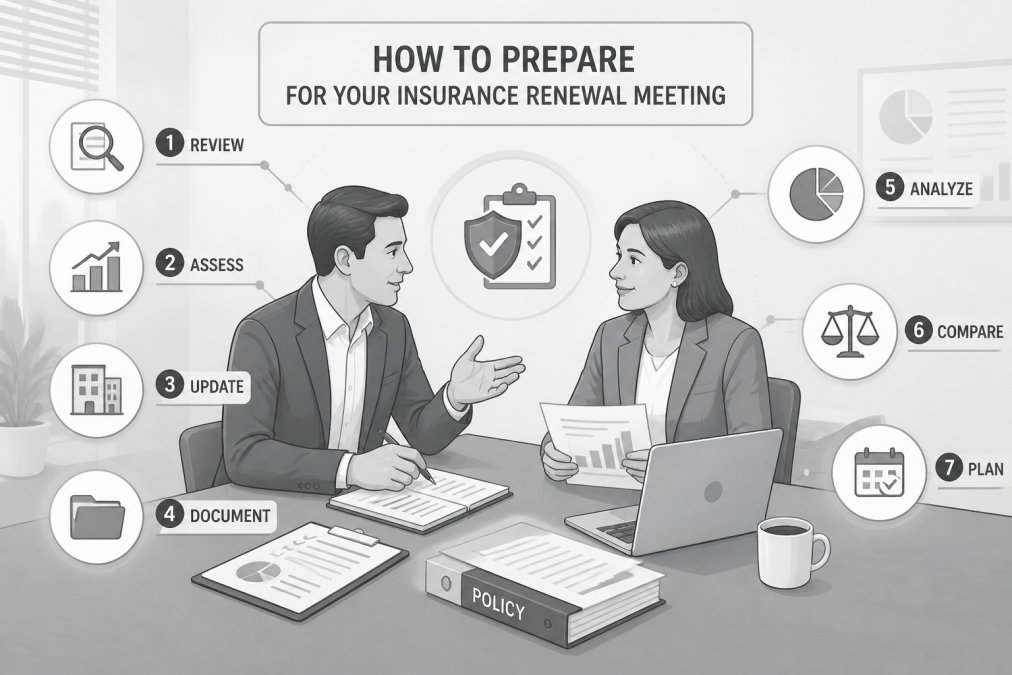
How to Prepare for Your Insurance Renewal Meeting
Your renewal meeting is where strategy becomes action. Preparation determines whether you walk out with better coverage, better pricing, or both.
Bring your documentation. Have your current policy, loss history, business financials, and a summary of any changes from the past year. Include documentation of safety improvements, equipment upgrades, or process changes.
Know your coverage gaps. Before the meeting, identify any areas where your current policy doesn’t align with your actual exposures. New product lines, expanded service areas, and additional equipment create coverage needs.
Have your questions prepared. Write down what you want to understand: Why did the premium change? What discounts are available? How are claims handled? What happens if you increase or decrease limits?
Bring your competitive quotes. If other carriers have provided better terms, bring those quotes. Your agent or carrier needs to know they’re competing for your business.
Discuss loss prevention. Talk about any loss control measures you’ve implemented or are considering. Ask your carrier what additional steps they’d recommend. Some carriers offer discounts for completing specific safety training.
Clarify claims procedures. Understand exactly how to file a claim, who to contact, expected timelines, and what documentation you’ll need. Ask about 24/7 claims reporting availability.
Document the meeting. Take notes on what was discussed, what was agreed to, and any action items. Follow up in writing within 24 hours summarizing the key points.
Use Data and Technology to Simplify Your Renewal Process
Technology transforms renewal from an annual scramble into a managed process.
Start with a renewal management system. Whether it’s a simple spreadsheet or dedicated software, you need a central place to track renewal dates, carrier information, coverage details, and premium history.
Automate renewal reminders. Set calendar alerts for key dates: 120 days before expiration, 60 days before, 30 days before. When the reminder hits, you’re prompted to take the next step.
Use data to inform decisions. Track your claims history, loss trends, and premium changes over time. Are certain types of claims increasing? Has your premium grown faster than inflation? Is your coverage keeping pace with your business growth?
Digitize your documentation. Store your policy documents, declarations pages, renewal quotes, and compliance records in a cloud-based system. When you need information quickly, it’s there.
Use your carrier’s tools. Many insurance carriers offer online portals where you can view your policy, request changes, and access claims information.
Consider a broker management platform. If you work with a broker or agent, many now use platforms that let you access quotes, compare options, and manage documents online.
Technology eliminates the administrative friction that slows renewal down, giving you more time to focus on the strategic decisions that actually matter.
Maintain Client Relationships Between Renewals
The best renewal outcomes come from strong relationships built year-round, not conversations that happen only when policies are expiring.
Schedule regular check-ins. A quarterly or semi-annual conversation keeps your agent updated on your business. They learn about changes before renewal season. When renewal arrives, there are no surprises.
Communicate changes promptly. When something significant happens, you open a new location, hire a large number of employees, add a new service line, acquire equipment, tell your agent immediately. Early notification gives your carrier time to adjust coverage and pricing before renewal.
Ask for guidance on risk management. Your agent or broker should be a resource for loss prevention. Many carriers have risk management specialists who can conduct on-site reviews and provide specific recommendations.
Provide feedback on claims experiences. If you’ve filed claims, share your experience with your agent. This feedback helps your agent understand which carriers truly deliver on service and helps them advocate for you at renewal.
Stay engaged with your carrier. If your carrier offers safety training, attend. If they host webinars on industry trends, participate. If they have a customer portal, use it.
Discuss your growth plans. Share your business trajectory with your agent. If you’re planning to expand, hire more staff, or add services, let them know. They can help you anticipate coverage needs and avoid gaps.
Relationships built on regular communication and transparency make renewal conversations easier and more productive.
Proactive insurance renewal management transforms how you think about your coverage. Instead of scrambling when renewal notices arrive, you’re in control of the process. You’re making informed decisions based on your actual business needs and negotiating from a position of strength.
The process starts with planning. Build your timeline, gather your documentation, and commit to regular communication with your agent. Ready to take control of your renewal? Contact Colstan & Associates today for a comprehensive policy review and let’s build a strategy that works for your specific situation.
Frequently Asked Questions
How far in advance should I start the proactive insurance renewal process?
Begin your proactive insurance renewal process 60 to 90 days before your policy expires. This timeline allows you to review current coverage, request quotes from multiple carriers, identify any coverage gaps, and make adjustments without rushing. Starting early also gives you leverage in negotiations and time to address any underwriting questions that may arise during the renewal cycle.
What documentation do I need for a smooth commercial insurance renewal?
Gather your current policy documents, loss history and claims records from the past three years, updated financial statements, payroll information, a list of employees and their job duties, property inventory and valuations, and any safety improvements or corrective actions you've implemented. Having this documentation organized and ready demonstrates professionalism and accelerates the underwriting process for your renewal.
What are the most common insurance renewal mistakes businesses make?
Common mistakes include waiting until the last minute to renew, failing to review coverage adequacy annually, not communicating changes in business operations to your agent, assuming your current policy still fits your needs, and overlooking opportunities to bundle policies for savings. Many business owners also skip the mid-year policy review, missing chances to address emerging risks before renewal discussions begin.
How can risk management and loss control lower my insurance premiums?
Implementing documented safety training, incident reporting procedures, and corrective actions demonstrates your commitment to loss prevention. Carriers reward businesses that actively manage risk through lower premium rates and better terms. Maintaining a clean claims history, conducting regular property inspections, and addressing hazards proactively all signal to underwriters that you're a lower-risk client, directly affecting your renewal pricing.
This article was written using GrandRanker