


16 Sep How to Value Your Vehicle for Insurance in 2026
Table of Contents
- Why Your Insurance Payout Depends on an Accurate Vehicle Valuation
- What You’ll Need to Value Your Vehicle for Insurance
- Step 1: Understand Actual Cash Value vs Replacement Cost
- Step 2: Research Market Value and Book Value Sources
- Step 3: Document Condition, Mileage, and Maintenance Records
- Step 4: Get a Vehicle Appraisal for Insurance Purposes
- Step 5: How to Insure Classic Car Collection with Agreed Value
- Step 6: Challenge a Low Total Loss Settlement
- Know Your Vehicle’s Value Before You Need It
- Frequently Asked Questions
Last Updated: September 6, 2026
Knowing how to value your vehicle for insurance in 2026 is the difference between a smooth claims process and a frustrating fight over your settlement. Most drivers discover their vehicle value insurance estimate only after an accident, which is the worst time to learn the number is too low. This guide from Colstan & Associates walks you through a six-step process to establish an accurate value before you need it.
At its core, vehicle value insurance is the figure your insurer uses to determine premiums, coverage limits, and total loss payouts. This number rarely matches what you paid or what you could sell the car for privately.
Why Your Insurance Payout Depends on an Accurate Vehicle Valuation
Your insurance payout hinges on how your policy defines value, and most standard auto policies use actual cash value rather than what you originally paid. When a vehicle is declared a total loss, the insurer calculates actual cash value by taking replacement cost and subtracting depreciation for age, wear and tear, and mileage (iii.org).
A common mistake is assuming your payoff amount or purchase price protects you. If you owe more on a loan than the vehicle is currently worth, you face a coverage gap that standard policies do not close. Gap insurance covers the difference between the ACV payout and your remaining loan balance.
What You’ll Need to Value Your Vehicle for Insurance
Gathering the right documentation before you start saves hours of back-and-forth later. You will need your vehicle identification number, current odometer reading, and the make, model, and trim level. The trim matters more than most people expect, since two versions of the same model can differ by thousands of dollars in book value.
Your paperwork should include the title and registration to establish proof of ownership, plus a detailed vehicle condition report. Collect maintenance records, repair receipts, and documentation of recent upgrades. Accident history also plays a significant role, so pull a vehicle history report to see what insurers will find.
Photograph your vehicle from every angle, including the odometer and interior, on a regular basis. A dated photo library gives you concrete evidence if you need to dispute a low valuation after a claim.
Step 1: Understand Actual Cash Value vs Replacement Cost
Actual cash value is the fair market price to replace your vehicle today minus depreciation. Replacement cost is what it would cost to buy an identical new vehicle without deducting for age or condition. Standard auto policies almost always use actual cash value.
A three-year-old sedan with 45,000 miles might have an ACV well below its original sticker price, even in excellent condition. Insurers use proprietary pricing databases that factor in regional market fluctuations, so the same car can produce different payouts depending on where you live.
For most drivers, ACV is the baseline you should expect, and replacement cost is a premium add-on you rarely get with personal auto coverage.
Step 2: Research Market Value and Book Value Sources
Start your research with the major valuation guides that insurers themselves consult. Kelley Blue Book (KBB) and NADA Guides are the most widely used sources, and both offer online tools where you can input your vehicle specifications for a range of values.
In 2026, traditional book value sources are no longer just measuring mechanical wear and tear. They are now pricing in technology and battery health, which has become a major differentiator in vehicle valuation.
The New Depreciation Driver: Software and Battery Health
For internal combustion engine (ICE) vehicles, the valuation model is well-established: mileage, condition, and accident history are the primary drivers. But for electric vehicles (EVs) and modern, software-defined vehicles, value is now tied to the health of the high-voltage battery and the currency of its software.
- EV Battery Health: The battery is the single most expensive component in an EV. A vehicle with a battery at 90% state of health (SOH) is worth significantly more than one at 75% SOH, regardless of mileage. Insurers are beginning to incorporate battery health data from telematics and diagnostic reports into their valuation models. When researching your vehicle’s value, you need to know your battery’s SOH. Many modern EVs provide this in the infotainment system, or you can get a diagnostic report from a dealership or a service like Recurrent.
- Software and Infotainment Obsolescence: A 2022 vehicle with an outdated infotainment system that no longer receives over-the-air (OTA) updates is now valued less than an identical 2022 vehicle that is current on its software. Features like advanced driver-assistance systems (ADAS) that are disabled due to a lapsed subscription or a lack of a required hardware update can also reduce value. When you are looking at comparable listings, check whether the vehicle’s software is up to date. A car that still has the latest features is a stronger comp than one that has fallen behind.
How to Use This in Your Research
- Check the Valuation Tools’ Questions: When you use KBB or NADA, note whether they ask about battery health or advanced technology packages. If they do, be as specific as possible. If they do not, recognize that their estimate may not fully capture the value of a well-maintained battery or the penalty of an outdated system.
- Look for Tech-Specific Comps: When searching local dealership listings, do not just filter by make, model, and year. Filter by trim level and look for keywords like “Long Range,” “Technology Package,” or “Premium Connectivity.” A base model EV with a smaller battery is not a valid comp for a long-range version.
- Document Your Vehicle’s Tech Status: Take a screenshot of your vehicle’s software version and, if it is an EV, its battery health report. This is now just as important as a dated photo of the odometer.
Kelley Blue Book’s valuation methodology explains how their pricing data incorporates regional trends and current inventory levels, but it is your job to ensure the data reflects the technological state of your specific vehicle.
In 2026, the old adage “mileage is the biggest depreciation driver” is no longer the whole story. For modern vehicles, the health of the battery and the currency of the software are now co-equal factors. Your research must account for both to build a credible case for a higher valuation.
Step 3: Document Condition, Mileage, and Maintenance Records
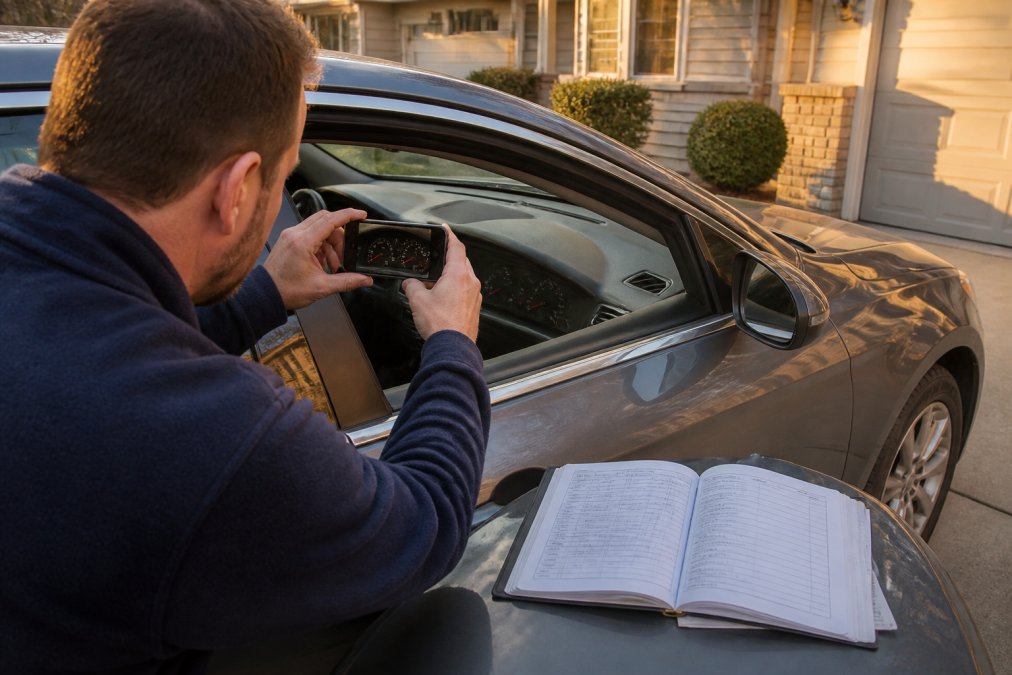
Condition is the single most subjective factor in vehicle valuation, which makes documentation your strongest tool. Insurers grade vehicles on a scale from excellent down to salvage, and the difference between grades can shift a payout by thousands of dollars (ncua.gov).
Create a written condition report noting every detail: paint condition, interior wear, tire tread depth, and aftermarket additions. Organize maintenance receipts and service logs chronologically, since a vehicle with complete service history is worth measurably more than one with gaps.
The odometer reading, documented with a dated photo, anchors your valuation. An accurate reading protects you from an insurer estimating higher miles than your vehicle actually has.
Step 4: Get a Vehicle Appraisal for Insurance Purposes
A professional vehicle appraisal for insurance purposes is an independent assessment of your car’s value conducted by a certified appraiser. It provides a documented opinion you can submit to your insurer, and carries the most weight for newer vehicles, modified cars, and models with unusual specifications.
The appraisal process involves a physical inspection, a review of maintenance records, and a comparative market analysis. The resulting report includes photographs, condition grading, and a stated value backed by comparable sales data. calculating accident settlements.
Insurance companies are not obligated to accept an independent appraisal, but a professional document forces them to justify their own number in writing. Presenting an appraisal early in the claims process often leads to a faster, fairer settlement.
Step 5: How to Insure Classic Car Collection with Agreed Value
Classic cars and collector vehicles operate under different valuation rules than daily drivers. Standard auto insurance values a classic at actual cash value, ignoring the appreciation collector vehicles often experience. Agreed value coverage solves this by having you and the insurer sign off on a fixed payout amount before a loss.
With an agreed value policy, you and the insurer establish the car’s worth up front, typically through an appraisal. If the vehicle is totaled, you receive the agreed amount with no depreciation applied, protecting you from a restored classic being valued at scrap prices.
Colstan & Associates partners with Hagerty Insurance to provide specialized coverage for classic car collections. Working with an agency that understands collector vehicles ensures your policy reflects the true value of your investment rather than a generic market valuation.
Agreed value coverage is essential for any vehicle that has appreciated, is heavily modified, or would cost more to replace than its standard book value suggests.
Step 6: Challenge a Low Total Loss Settlement
When an insurer declares your vehicle a total loss, the initial settlement offer is rarely their final number. It is an opening bid. A well-prepared policyholder can successfully challenge a low offer by acting methodically and understanding the formal mechanisms available.
Step 1: Scrutinize the Valuation Report. Your insurer is legally required to provide a copy of the report they used to calculate your vehicle’s ACV. Do not skim it. Go line-by-line and verify the following:
- Vehicle Identification Number (VIN): Confirm it matches your vehicle exactly. A single digit error can pull comps from the wrong model year or trim.
- Trim Level and Options: Insurers often default to the base trim. If your car has the premium sound system, navigation, or a tow package, these must be listed. Each option adds value.
- Mileage: Check the odometer reading they used. An error of even 5,000 miles can reduce the payout by several hundred dollars.
- Condition Grade: This is the most subjective and frequently challenged line item. Insurers typically grade vehicles as Excellent, Very Good, Good, or Fair. If they graded yours as ‘Good’ but your documentation shows a well-maintained vehicle with new tires, you have grounds to argue for an upgrade.
Step 2: Build Your Comparable File. The insurer’s report is based on a set of comparable vehicles (comps) they selected from regional dealer listings and auction data. You have the right to see those comps. If they are not included in the report, request them in writing. Your job is to find better comps. Look for vehicles that are:
- The same model year, make, and model.
- Within a 50-mile radius of your zip code.
- Listed at dealerships, not private sales, as dealer retail prices are higher.
- In similar or worse condition than yours, but priced higher.
Print or save screenshots of at least three to five of these listings. Sites like Autotrader, Cars.com, and CarGurus are excellent sources. When you present your counteroffer, you are not asking for a favor; you are showing the insurer that their data does not reflect the current market.
Step 3: Submit a Written Rebuttal. Do not call your claims adjuster and argue verbally. Send a formal, written rebuttal via email and certified mail. Structure it as follows:
- Policy Number and Claim Number: At the top of the letter.
- Your Counteroffer: State the specific dollar amount you believe is the correct ACV.
- Evidence: Attach your comparable listings, your independent appraisal (if you have one), dated photographs, and maintenance records.
- Specific Errors: List each error you found in their report (e.g., “Your report lists the vehicle as the LS trim, but it is the LTZ trim with the optional V8 engine.”).
A common pattern is that adjusters are empowered to make small adjustments, often 5-10%, if you present a clear, documented case. They are less likely to move on a vague complaint.
Step 4: Invoke the Appraisal Clause. If you and the insurer still cannot agree, your policy contains an appraisal clause. This is a formal, binding dispute resolution process. Here is how it works:
- You and the insurer each hire a qualified appraiser.
- Your appraiser and the insurer’s appraiser each submit an independent valuation.
- If they cannot agree, they select a neutral umpire.
- The umpire reviews both valuations and makes a final, binding decision.
This process is not free. You are responsible for your appraiser’s fee and half of the umpire’s fee. However, for a vehicle with significant value, the cost is often worth the potential increase in the settlement. Most practitioners find that the mere threat of invoking the appraisal clause is enough to prompt the insurer to make a more reasonable offer, as they prefer to avoid the cost and time of the process.
Do not sign a settlement release or cash a final settlement check until you are fully satisfied. Cashing the check can be interpreted as accepting the offer and waiving your right to further negotiation.
Keep a log of every phone call, including the date, time, and name of the person you spoke with. This paper trail demonstrates your diligence and professionalism, which can work in your favor during negotiations.
Know Your Vehicle’s Value Before You Need It
The time to establish your vehicle’s insurance value is now, not after an accident. Document your car’s condition, track your maintenance, and understand whether your policy protects you at actual cash value or agreed value.
At Colstan & Associates, our licensed agents help clients across 23+ states find coverage designed to fit their needs and budgets. With over 20 years of dedicated service and recognition as Merchants Insurance Group’s 2024 Agent of the Year, we bring a client-first approach to every policy we write. Get started with Colstan & Associates and make sure your vehicle is valued correctly before you ever file a claim.
Frequently Asked Questions
How do insurance companies determine the actual cash value of a vehicle?
Insurers calculate actual cash value (ACV) by starting with the vehicle’s replacement cost and subtracting depreciation based on age, mileage, and wear and tear. They also factor in the make and model, accident history, and regional market data. In 2026, many carriers use third-party valuation tools that pull from recent sales of similar vehicles. You can challenge their figure by providing your own comparable sales data and maintenance records that show above-average condition.
What is the difference between market value and agreed value for insurance?
Market value is what a buyer would likely pay for your vehicle right now, and it fluctuates with supply and demand. Agreed value is a fixed amount you and your insurer set in advance, which is what you receive in a total loss claim. Standard auto policies pay actual cash value, which tracks market value minus depreciation. Agreed value policies are common for classic car collections because they protect against market swings and cover restoration costs.
How does vehicle depreciation affect insurance payouts in 2026?
Vehicle depreciation is the largest factor in a total loss payout. New cars lose value fastest in the first three years, and that depreciation is reflected in your actual cash value. In 2026, market conditions also matter: if used car prices are rising, your payout may be higher than expected, and if they fall, your settlement drops. You can offset depreciation by choosing replacement cost coverage for newer vehicles or agreed value coverage for classics.
What documentation do I need to prove my vehicle’s value to an insurer?
Gather a vehicle condition report with photos from every angle, including any flaws, plus the odometer reading. Keep maintenance records, repair receipts, and a file of recent comparable sales or listings for your exact make and model. A professional vehicle appraisal for insurance purposes is the strongest evidence, especially for modified or classic cars. If you dispute a settlement, submit this documentation promptly and reference the vehicle identification number on every document.